
- May 26, 2026
- By
- In Brakes
- 8
- 0
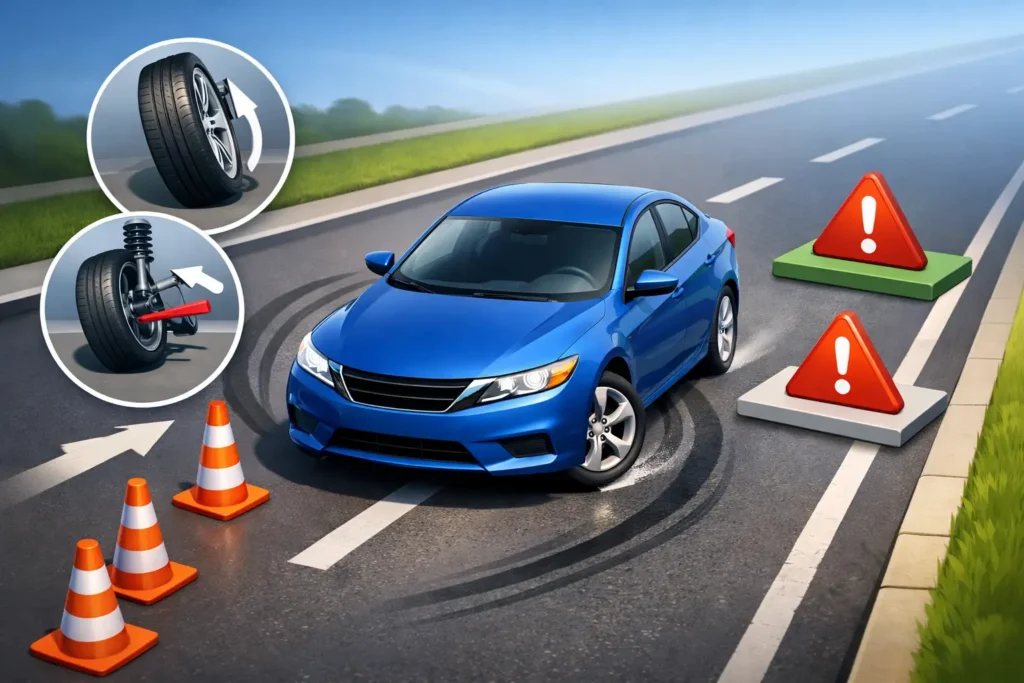
You let go of the wheel for a second on a straight road, and the car starts drifting left or right. That moment is frustrating, but it can also be an early warning sign. If you’re asking, “why does my car pull,” the answer usually comes down to tires, alignment, brakes, suspension, or road conditions – and some causes are more urgent than others.
A vehicle that pulls consistently should not be ignored. Even if it still feels drivable, pulling can make daily commuting more tiring, wear out tires faster, and point to a safety issue that gets worse over time. The good news is that the cause is often something a qualified shop can diagnose quickly.
The first thing to know is that not every drift means something is broken. Many roads are built with a slight slope so water can drain off the surface. That slope can make a car move slightly to one side, especially if you briefly loosen your grip on the steering wheel. Wind, uneven pavement, and grooves in the road can also affect how the car tracks.
What matters is consistency. If your car pulls on different roads, at different speeds, or under braking, there is usually a mechanical reason behind it. The pattern tells a technician a lot. A pull that happens all the time points toward tires or alignment. A pull only during braking often suggests brake issues. A pull that comes and goes may involve tire pressure, road surface, or worn suspension parts.
In many cases, the problem starts with the tires. A tire that is low on air can change the way the vehicle rolls and cause it to pull toward that side. This is one of the simplest issues to check, but it is also one of the most overlooked.
Uneven tire wear can create the same feeling. If one tire is worn differently from the others, it may grip the road unevenly. You might also have an internal tire issue that is harder to spot from the outside. Sometimes a tire develops a condition that causes it to pull even when inflation looks correct. In the shop, technicians can inspect tread wear, measure pressure accurately, and rotate or test tires to see whether the pull changes sides.
Wheel and tire size can matter too. If tires are mismatched, overly worn, or not balanced properly, the vehicle may not track straight. For drivers who use their car every day for work, school runs, and errands around Spring, that kind of issue can get annoying fast and become expensive if it shortens tire life.
When customers ask why does my car pull, wheel alignment is one of the first things that comes to mind. Alignment refers to the angles of the wheels and how they meet the road. When those angles are off, the vehicle can drift to one side, the steering wheel may sit off-center, and the tires may wear out unevenly.
Alignment can shift after hitting a pothole, bumping a curb, driving on rough roads, or replacing certain steering and suspension parts. Sometimes the change is sudden. Other times, it happens gradually and only becomes obvious once the pull gets stronger.
Not every alignment issue feels dramatic. Some drivers get used to holding the wheel slightly off-center and do not realize there is a problem until they notice uneven tread wear. That is one reason routine inspections matter. Catching alignment trouble early can save a set of tires and help the vehicle handle the way it should.
If the car pulls mostly when you press the brake pedal, the braking system needs attention. A sticking brake caliper is a common cause. When one side applies more braking force than the other, the vehicle can tug in that direction.
You may also notice a hot smell near one wheel, reduced fuel economy, unusual brake wear, or the car feeling sluggish after driving. In some cases, a brake hose issue or uneven pad wear may be involved. Because brake problems affect stopping performance, this is not the kind of symptom to put off until later.
A brake-related pull can be subtle at first. Maybe it only happens during a harder stop or at highway speeds. Even then, it deserves a proper inspection. Brakes should apply evenly and predictably every time.
Your vehicle’s suspension and steering systems do more than keep the ride comfortable. They help the tires stay planted and the car moving in the direction you intend. When components such as tie rods, ball joints, control arms, or bushings wear out, steering can become loose, uneven, or unstable.
This kind of wear may show up as pulling, wandering, clunking noises, vibration, or a steering wheel that does not return smoothly after a turn. It depends on which part is worn and how badly. Some issues are easy to notice. Others only become clear during an inspection with the vehicle lifted.
Suspension problems often overlap with alignment symptoms. That is why guessing can get expensive. If a worn component is causing the alignment to shift, simply aligning the vehicle without fixing the part may not solve the problem for long.
It can feel especially frustrating when the pull starts after work was just done. That does not always mean the repair was done incorrectly, but it does mean the vehicle should be checked again.
New tires can sometimes reveal existing alignment or suspension issues that old, worn tires were masking. In other cases, tire pressure may not be set evenly, a tire may have a pull-related defect, or the alignment may need to be adjusted after suspension or steering repairs. If the steering wheel is off-center after service, that is another clue something needs a second look.
A trustworthy shop should be willing to inspect the concern, explain what they find clearly, and separate normal road feel from a real mechanical problem. That kind of transparency matters.
A slight drift on certain roads may not be urgent. A strong, steady pull almost always is. The more symptoms you notice, the more important it is to schedule service soon.
Take it seriously if the vehicle pulls hard under braking, the steering wheel shakes, the tires show uneven wear, the car feels unstable at highway speed, or you hear noises when turning. Those signs suggest more than a minor nuisance. They point to a condition that can affect safety, tire life, and control.
If the pull started suddenly, especially after hitting something in the road, do not assume it will go away on its own. Sudden changes usually mean something shifted, bent, loosened, or failed.
A good inspection goes beyond a quick test drive. The technician should check tire pressure and condition, inspect tread wear, look at brake operation, evaluate steering and suspension parts, and verify alignment measurements if needed. That process helps narrow down the real cause instead of replacing parts based on guesswork.
Sometimes the fix is simple, like correcting tire pressure or performing an alignment. Sometimes there are layered issues, such as worn suspension parts plus uneven tire wear. That is why clear communication matters. You should know what is causing the pull, what needs immediate attention, and what can be planned for later if more than one issue is found.
At 360 Auto, that is the kind of practical, straightforward service local drivers count on. The goal is not just to stop the pull – it is to make sure your vehicle drives safely, wears its tires evenly, and gives you confidence every time you get behind the wheel.
If you have been asking yourself, “why does my car pull,” it is worth having it checked before the problem turns into a bigger repair bill. Pulling rarely fixes itself. More often, it leads to worn tires, added stress on steering components, or braking issues that become harder to ignore.
Your car should track straight, brake evenly, and feel stable in everyday driving. When it does not, that is your cue to get answers from a shop that will inspect it carefully and explain it in plain language. A small steering issue today is much easier to deal with than a set of ruined tires or a safety problem next month.


