
- April 17, 2026
- By
- In Brakes
- 19
- 0
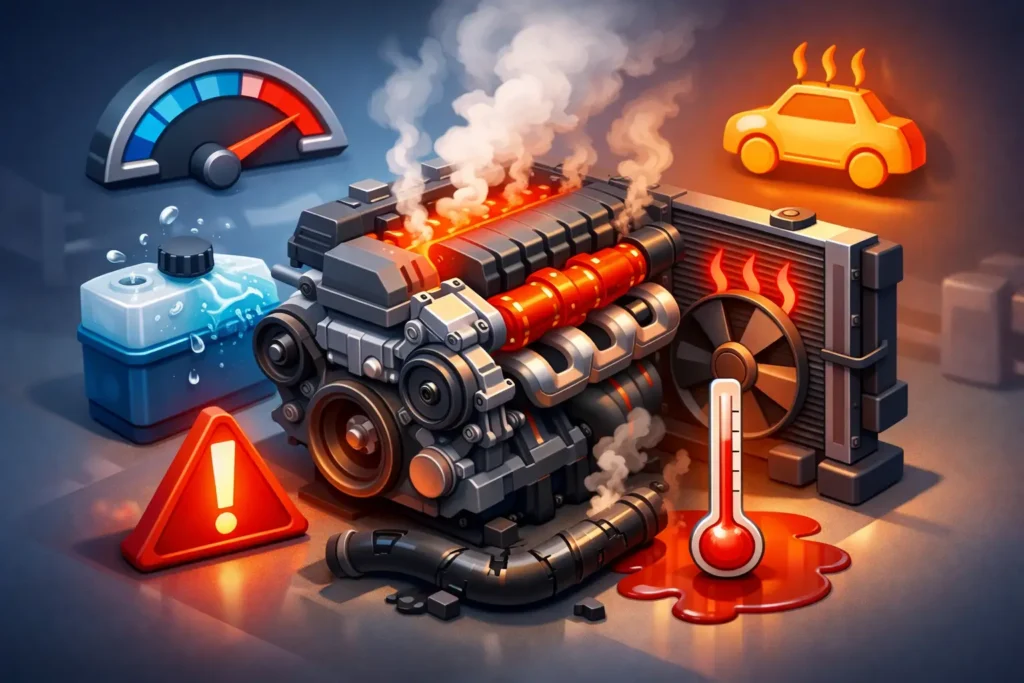
You are headed to work, school pickup, or the grocery store, and suddenly the temperature gauge starts climbing. That is usually how engine overheating causes show up in real life – with little warning and no convenient timing. When an engine runs hotter than it should, the problem can move from a small repair to major damage fast.
That is why overheating should never be treated like something that might fix itself. Modern vehicles are built to manage heat carefully, but they still depend on a cooling system with several parts working together. If one part weakens, leaks, sticks, or fails, engine temperature can rise quickly.
Your engine creates a lot of heat every time you drive. The cooling system keeps that heat under control by circulating coolant through the engine, carrying excess heat away, and releasing it through the radiator. The water pump, thermostat, hoses, radiator, cooling fans, pressure cap, and sensors all play a role.
When everything works properly, your engine stays within a safe temperature range whether you are idling at a stoplight or driving on the highway. When one of those parts stops doing its job, heat builds up where it should not. That is when the warning light, steam, strange smells, or reduced performance can start.
Some overheating problems are simple, and some point to deeper mechanical trouble. The challenge is that the early symptoms can feel similar. Here are the issues technicians see most often.
Low coolant is one of the most common engine overheating causes, and it often starts with a leak. Coolant can escape from a hose, radiator, water pump, heater core, reservoir, or a loose connection. In some cases, a small leak only shows up after the engine has been running and pressure builds.
If coolant drops too low, the system cannot move heat away from the engine efficiently. Topping it off may seem like a quick fix, but if the level keeps dropping, the real issue is still there. A vehicle should not regularly lose coolant under normal conditions.
The radiator is responsible for releasing heat from the coolant. If it is clogged internally, blocked externally, leaking, or damaged, cooling performance suffers. Dirt, road debris, and age can all affect how well it works.
A radiator issue may show up more in stop-and-go traffic than at highway speed, but that depends on the exact failure. In older vehicles, corrosion inside the radiator can also reduce flow enough to create overheating even if there is no visible leak.
The thermostat controls when coolant flows through the engine and radiator. If it sticks closed, coolant cannot circulate the way it should, and heat builds fast. This can lead to sudden overheating, sometimes within a short drive.
A stuck thermostat is a good example of why it helps to diagnose the cause rather than guess. The symptom is overheating, but the repair depends on what has failed. Replacing random parts usually costs more in the long run.
The water pump keeps coolant moving through the system. If it wears out, leaks, or its impeller is damaged, circulation can slow down or stop. Without proper flow, coolant cannot absorb and transfer heat effectively.
Some water pump failures are obvious because you may hear noise or see coolant leaking. Others are less clear at first. If the pump is weak rather than fully failed, overheating may happen under heavier loads, during longer drives, or in hotter weather.
Cooling fans help pull air through the radiator, especially when the vehicle is idling or moving slowly. If a fan motor, relay, switch, sensor, or wiring problem keeps the fan from turning on, engine temperature can rise quickly in traffic.
This is one reason a vehicle may run fine on the highway but overheat at stoplights. At higher speeds, natural airflow helps cool the radiator. In town, the fan becomes much more important.
Cooling system hoses carry coolant between components. Over time, they can crack, swell, soften, or leak. A collapsed hose can also restrict flow. Belts matter too, especially in vehicles where the water pump depends on belt-driven operation.
These parts may not get much attention until they fail, but they are essential. A worn belt or weak hose can create an overheating problem with very little notice.
The radiator cap does more than cover an opening. It helps maintain the proper pressure in the cooling system. That pressure raises the boiling point of coolant, which helps the system handle normal engine heat.
If the cap no longer holds pressure, coolant can boil too soon or escape into the overflow area in the wrong way. It is a small part, but it can contribute to bigger temperature problems.
A blown head gasket is one of the more serious engine overheating causes. It can allow coolant and combustion gases to mix where they should not. That disrupts cooling, reduces engine performance, and can lead to major internal damage.
Common signs may include repeated overheating, white exhaust smoke, coolant loss with no obvious external leak, rough running, or milky oil. Not every overheating vehicle has a head gasket problem, but when it does, quick diagnosis matters.
An engine can tolerate only so much heat before damage starts. If temperatures climb too high, metal parts can warp, gaskets can fail, and internal components can wear much faster. What begins as a coolant leak or thermostat issue can turn into cylinder head damage or complete engine failure if the vehicle keeps being driven.
That is the trade-off many drivers face. It may be tempting to finish the trip and deal with it later, especially if the vehicle still moves. But overheating is one of those warnings that can get much worse in a very short distance.
Sometimes the temperature gauge is the first clue. Other times, the signs are more subtle. You may notice steam from under the hood, a sweet smell from leaking coolant, weak air conditioning performance, reduced power, or coolant puddles where you park.
Some vehicles also trigger a warning light or message before the gauge reaches the danger zone. If you see any of these signs together, that usually points to a cooling system problem that needs attention soon.
If your temperature gauge rises sharply or a warning light comes on, turn off the air conditioning and, if needed, turn on the heater to help pull heat away from the engine. Then get to a safe place as soon as possible and shut the vehicle off.
Do not remove the radiator cap while the engine is hot. The system may be under pressure, and hot coolant can cause serious burns. Let the engine cool before anyone inspects it.
If the overheating is severe, if steam is coming out, or if the vehicle has lost power, it is smarter to stop driving and arrange for help. Continuing to drive often turns a repairable issue into a much larger one.
Many cooling system parts can create similar symptoms. Low coolant could come from a hose leak, radiator crack, water pump problem, or internal engine issue. Poor cooling at idle could be fan-related, but it could also point to low coolant or restricted flow.
That is why a proper inspection matters. Pressure testing, checking for leaks, confirming fan operation, inspecting belts and hoses, and verifying thermostat and water pump performance can help pinpoint the actual cause. At a trusted local shop like 360 Auto, that kind of direct, honest diagnosis helps drivers avoid spending money on repairs they do not need.
The best way to avoid overheating is to stay ahead of cooling system wear. Routine inspections can catch weak hoses, low coolant, worn belts, leaks, or aging components before they strand you on the road. Manufacturer service intervals matter too, especially for coolant flushes and replacement of wear items.
Texas heat can make small cooling system issues show up faster, particularly in heavy traffic or during long commutes. If your vehicle has been running hotter than usual, losing coolant, or showing any warning signs, waiting rarely improves the situation.
A dependable vehicle starts with paying attention to what it is telling you. If your engine temperature is creeping up, take it seriously, get it checked, and give the problem a chance to stay small.


