
- April 21, 2026
- By
- In Brakes
- 13
- 0
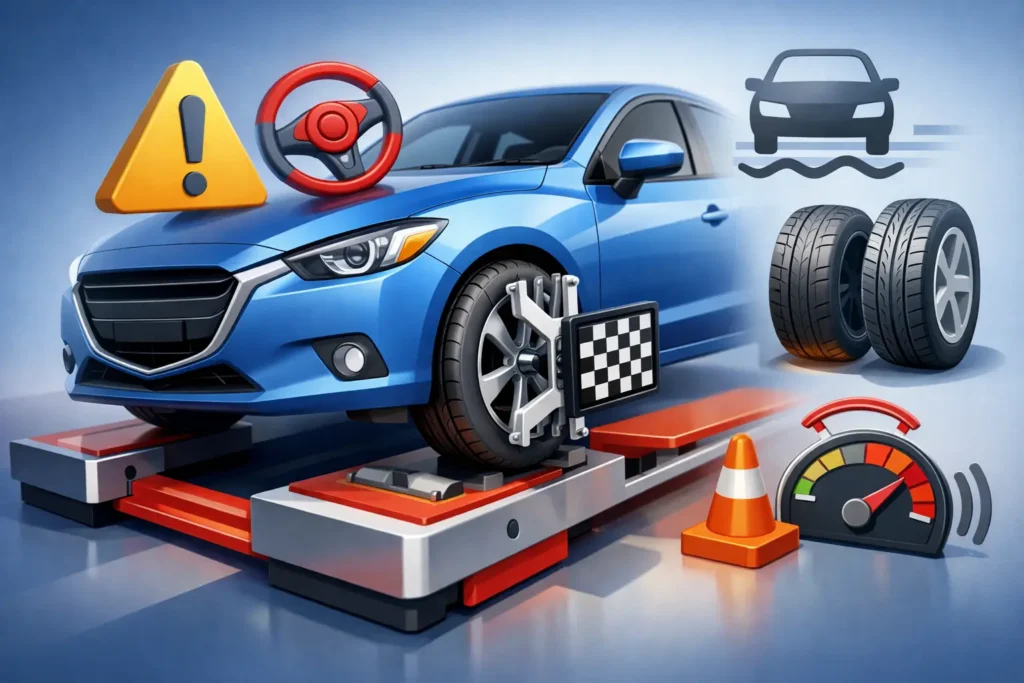
A car that suddenly pulls to one side on Rayford Road or feels off-center on I-45 usually is not having a bad day. It is often one of the clearest wheel alignment warning signs, and catching it early can save you from bigger tire and suspension problems later.
Alignment problems tend to start small. Maybe the steering wheel is a little crooked. Maybe the tires look more worn on one edge. Maybe the ride feels less settled than it did a month ago. Those changes are easy to ignore when life is busy, but they usually do not fix themselves.
For most drivers, alignment issues show up in the way the vehicle feels long before they turn into a major repair. The good news is that the signs are usually easy to notice once you know what to watch for.
Wheel alignment is the adjustment of your vehicle’s suspension angles so the tires meet the road the way the manufacturer intended. It is not just about keeping the steering wheel straight. Proper alignment affects tire wear, handling, braking stability, and how confident the car feels at everyday speeds.
When alignment is off, the tires can scrub against the road instead of rolling cleanly. That adds stress to the tires and suspension components. In some cases, poor alignment can also make a vehicle feel less predictable in wet weather or during quick lane changes.
Not every handling problem is caused by alignment. Tire pressure, worn suspension parts, damaged wheels, and even certain road surfaces can create similar symptoms. That is why a proper inspection matters.
Some signs are obvious. Others are subtle enough that drivers get used to them. If you notice one symptom or a combination of them, it is worth having your vehicle checked.
If you are driving on a relatively straight, level road and your car consistently drifts to one side, alignment is a strong possibility. A slight crown in the road can cause minor movement, so context matters. But if you feel like you are always correcting the steering to stay in your lane, something is not right.
Pulling can also come from uneven tire pressure or a brake issue, so it is smart not to assume. Still, steady pull is one of the most common signs that alignment angles need attention.
Your steering wheel should sit close to centered when you are driving straight. If the car tracks straight but the wheel is turned slightly left or right, that usually points to an alignment issue.
Some drivers put up with this for months because the vehicle still seems drivable. The trade-off is that continuing to drive that way can speed up tire wear and make the car feel less stable over time.
This is one of the most expensive warning signs to ignore. When alignment is off, one tire edge may wear faster than the other, or one tire may wear differently than the rest of the set.
Run your hand across the tread or take a close look at the inner and outer edges. If one side is noticeably more worn, alignment should be on the list of things to inspect. The longer it goes unchecked, the more likely you are replacing tires sooner than expected.
A properly aligned vehicle should feel planted and responsive. If the steering feels vague, wanders more than usual, or seems less settled at highway speed, alignment may be part of the problem.
That said, this is one of those it-depends situations. Loose steering can also point to worn suspension or steering components. Alignment may be the fix, but a full inspection helps make sure the real cause is addressed.
Tire noise does not always mean alignment trouble, but unusual squealing during normal turns or everyday driving can happen when the tires are fighting the road surface at the wrong angle.
This symptom is easier to miss because many drivers assume it is just road noise or old tires. If the noise is new and it comes with pulling, uneven wear, or an off-center steering wheel, alignment becomes much more likely.
Vibration is often tied to tire balance, but in some cases alignment problems can contribute to a rougher feel through the steering system. If the vibration appears along with poor tracking or uneven tire wear, it is worth checking both balance and alignment.
This is a good example of why diagnostics matter. Two different issues can feel similar from the driver’s seat, but they require different fixes.
Sometimes the warning sign is not a symptom at all. It is the event that caused the problem. A hard hit from a pothole, curb impact, or road debris strike can knock alignment out of spec even if the vehicle seems mostly normal afterward.
This is especially true if the impact was strong enough to jolt the steering wheel or make you question whether something bent or shifted. Waiting until tire wear shows up can cost more than checking alignment soon after the hit.
A small alignment issue can turn into a bigger expense faster than many people expect. Tires are usually the first thing to pay the price. Uneven wear shortens tread life, and once that wear pattern is established, an alignment alone may not undo the damage.
Handling is the other concern. A car that pulls, wanders, or feels unsettled is more tiring to drive, especially for commuters and families who spend a lot of time on the road. In rain or during sudden steering corrections, those problems can become more noticeable.
Fuel economy can also take a modest hit if the tires are dragging instead of rolling efficiently. It may not be dramatic, but over time it adds up.
Normal driving wear is part of it. Suspension parts settle and wear over time, and roads are not always kind to your vehicle. Potholes, curb contact, speed bumps taken too fast, and minor impacts can all affect alignment.
Replacing suspension or steering components can also mean alignment needs to be reset. The same goes for some tire and wheel changes, depending on the vehicle and what work was performed.
Sometimes drivers expect alignment to last indefinitely if they have not had a major incident. In reality, even everyday driving around town can gradually change things, especially on rough roads.
If you notice any of the wheel alignment warning signs above, scheduling an inspection sooner is the safer move. The best time is before uneven tire wear becomes severe.
It also makes sense to have alignment checked after installing new tires, after a suspension repair, or after any strong impact with a pothole or curb. If your vehicle starts driving differently from one week to the next, trust that change. Drivers often know something feels off before they can describe it perfectly.
At a professional shop, the process usually includes measuring alignment angles with specialized equipment and checking for worn parts that could keep the alignment from holding. That second part matters. If a suspension component is loose or damaged, simply adjusting the angles may not solve the problem for long.
In straightforward cases, alignment service is quick and relatively affordable compared with the cost of replacing tires early. If the shop finds worn tie rods, ball joints, or other suspension parts, repairs may need to happen first.
That is where honest communication matters. A good technician should explain whether the issue is just alignment, alignment plus tire concerns, or a larger suspension problem. For local drivers in Spring who want clear answers without the runaround, that kind of approach makes a difference.
At 360 Auto, the goal is simple: help you catch problems early, explain them clearly, and get you back on the road with confidence.
If your car is pulling, your steering wheel is crooked, or your tires are wearing unevenly, do not wait for the symptoms to get louder. A quick check now can protect your tires, improve handling, and make every drive feel a lot more secure.


