
- May 3, 2026
- By
- In Brakes
- 10
- 0
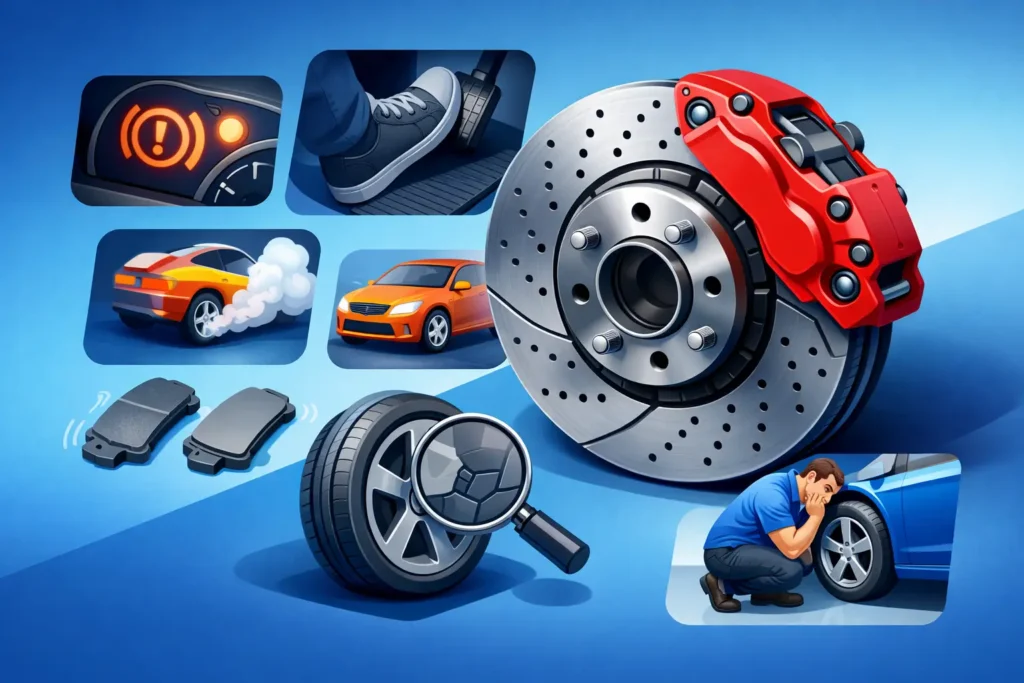
That high-pitched squeal backing out of the driveway is easy to ignore once. By the third or fourth time, it is usually your vehicle telling you something has changed. The best signs your brakes need service often show up in everyday driving first – on the school run, during your commute, or while stopping at a light in Spring traffic.
Brake problems rarely fix themselves, and waiting can turn a simple pad replacement into a more expensive repair. Just as important, brake issues affect the one system you count on every time traffic slows down unexpectedly. If your car feels different, sounds different, or takes longer to stop, it is worth paying attention.
Some warning signs are obvious, while others are more subtle. A brake system can wear down gradually, which is why many drivers adjust without realizing how much performance they have lost. These are the signs that deserve a closer look.
This is one of the most common early warnings. Brake pads are designed with wear indicators that can create a squealing sound when the friction material gets low. In many cases, that noise is your first chance to handle the issue before it gets worse.
That said, it depends. Not every squeak means the pads are finished. Moisture, surface rust, or dust can cause some temporary noise, especially after rain or if the vehicle has been sitting. But if the sound keeps happening during normal driving, it is smart to have it checked.
Grinding is different from squealing. If your brakes grind when you stop, the pads may be worn down far enough that metal parts are contacting the rotor. At that point, braking performance can drop, and the repair often becomes more involved.
This is one sign not to put off. Continuing to drive on grinding brakes can damage rotors, increase stopping distance, and lead to a much higher bill than catching the issue earlier.
Your brake pedal should feel firm and predictable. If it starts feeling soft or spongy, or if it sinks lower than normal when you press it, there may be air in the brake lines, worn hydraulic components, or a fluid-related issue.
A soft pedal can also point to a brake fluid leak, which is a safety concern. Because the braking system depends on hydraulic pressure, any loss of pressure should be inspected quickly. If the pedal suddenly drops to the floor or braking feels weak, that moves from inconvenient to urgent.
If your vehicle pulls left or right when you apply the brakes, something is not working evenly. This can happen with a sticking caliper, uneven pad wear, contaminated brake components, or even certain tire and suspension issues.
This is where diagnosis matters. Pulling during braking does not always mean the same repair on every vehicle. But it does mean the car is not stopping as evenly as it should, which can affect control in traffic or wet conditions.
A vibration when braking often points to uneven rotor wear or heat-related warping. You may notice it more at higher speeds, like when exiting the freeway or slowing down from a steady cruise.
Some drivers describe it as a shaking steering wheel. Others feel a pulsing through the brake pedal. Either way, that change in feel usually means the brake surfaces are no longer making smooth, even contact. The car may still stop, but it will not feel as stable or controlled as it should.
Sometimes the clearest sign is not a sound at all. It is the feeling that your car simply does not stop as quickly as it used to. If you are pressing harder on the pedal or giving yourself more room than usual, your brake system may be losing efficiency.
This can happen because of worn pads, glazed components, aging fluid, or a combination of issues. Drivers often adapt slowly to this kind of change, which makes it easy to overlook. If your brakes no longer inspire confidence, trust that feeling.
Dashboard warning lights exist for a reason. A brake light can indicate low brake fluid, worn components, or a system fault that needs professional attention. On some vehicles, the ABS light and brake warning light may appear separately, and each can point to a different issue.
It is tempting to keep driving if the car still stops, but warning lights should not be treated as background noise. A proper inspection can determine whether the problem is minor maintenance or a larger safety concern.
Not every brake issue announces itself with loud noise. Some problems develop quietly and show up as changes in smell, response, or routine wear patterns.
If you notice a sharp burning odor after heavy braking, your brakes may be overheating. This can happen in stop-and-go traffic or after repeated hard stops. One isolated moment may not mean major damage, but recurring heat smell deserves attention.
You might also notice your parking brake does not hold as well as it used to. On some vehicles, that can be tied to rear brake wear or adjustment issues. It is easy to forget about the parking brake until you really need it, especially on an incline.
Another overlooked sign is visible brake dust or wheels that look dirtier on one side than the other. Uneven dust buildup can sometimes suggest one brake is working harder than the rest. It is not a diagnosis by itself, but paired with noise or pulling, it adds useful information.
Brake service is one of those areas where timing matters. Replacing pads at the right time is usually more affordable than waiting until the rotors are damaged too. If calipers, hardware, or fluid issues are involved, catching them early can also help prevent related wear.
There is a comfort factor, too. Reliable brakes change how your whole vehicle feels. The car stops straighter, responds faster, and feels more controlled in daily driving. For families, commuters, and anyone spending time on busy roads, that peace of mind is worth a lot.
A professional brake inspection looks beyond whether the pads are thin. It can identify rotor condition, caliper operation, fluid level and condition, hose wear, and whether braking is happening evenly at all four corners.
That matters because symptoms can overlap. Vibration may be rotors, but it could also connect to suspension or tire issues. Pulling may be brake-related, but alignment and tire condition can contribute. Good service means finding the actual cause, not guessing based on one symptom.
Some brake problems can wait a day or two for a scheduled appointment. Others should move to the top of your list. If you hear grinding, feel very weak braking, notice a sinking pedal, or see a warning light along with poor brake performance, it is best not to push your luck.
Brakes are not a system to monitor for a few more weeks just to see what happens. If your vehicle feels unsafe, it probably is. A trusted local shop with experienced technicians can inspect the system, explain what is going on in plain language, and help you make the right repair decision without pressure.
At 360 Auto, that means treating brake concerns the way a neighborhood shop should – seriously, clearly, and with your safety in mind.
If your brakes are making noise, feeling different, or taking the confidence out of your drive, listen early. The sooner you act, the simpler the repair usually is, and the better your car will feel the next time you need to stop fast.


