
- July 19, 2026
- By
- In Brakes
- 2
- 0
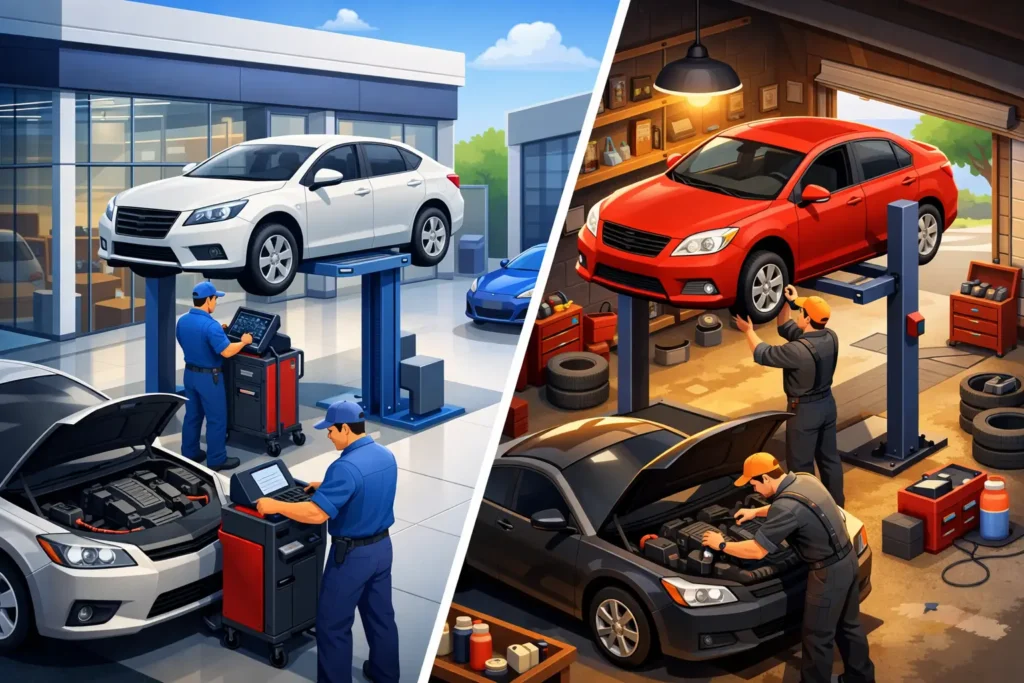
A dashboard warning light comes on during the morning school run. Your brakes start squealing before a commute down I-45. Your vehicle is overdue for an oil change, but the dealer is across town and the next appointment is days away. The dealer service vs local mechanic decision is not always as simple as “one is better.” It depends on your vehicle, the repair, your warranty, your schedule, and how much clear communication matters to you.
For Spring-area drivers, the best choice is usually the one that gives you confidence in the work, a fair explanation of the cost, and a vehicle that is ready when your family needs it.
Dealership service departments are connected to a specific manufacturer. They work on the brand every day, receive factory updates, and have access to brand-specific diagnostic equipment and technical information. For certain situations, that can be a meaningful advantage.
A qualified local repair shop serves many makes and models. Its technicians handle the work that keeps most vehicles moving: oil changes, brake repairs, tire service, batteries, air conditioning, belts and hoses, engine diagnostics, and scheduled maintenance. A neighborhood shop can also offer a more personal relationship, because the goal is not a one-time transaction. It is earning your trust over every mile ahead.
Neither option is automatically right for every repair. The smarter question is: What does this vehicle need right now?
Dealer service can be the right call when your vehicle has an active manufacturer warranty and the repair may be covered. If a recall has been issued, the dealer is also generally the proper place to have that work completed. Factory recalls are tied to the manufacturer, and completing them promptly protects both your safety and your vehicle’s value.
A dealer may also be helpful for unusual, brand-specific concerns. Complex software updates, programming needs, advanced driver-assistance system calibration, or a problem that has already been difficult to diagnose may require manufacturer-level tools and procedures. Luxury, high-performance, hybrid, and electric vehicles can sometimes have specialized needs as well.
If you own a newer vehicle with a complicated issue and want factory-only parts or a manufacturer repair record, dealer service may be worth the higher price and longer wait. Just ask for a written estimate, find out what is covered, and confirm whether diagnostics are charged separately.
For most routine maintenance and common repairs, a reputable independent shop can be an excellent choice. Oil changes, brake pads and rotors, tire rotations, alignments, A/C service, battery replacement, cooling-system repairs, check-engine-light diagnostics, and suspension work do not automatically require a dealership.
Local shops are often more convenient for busy drivers. You may be able to get an appointment sooner, speak directly with the service team handling the work, and avoid the longer travel time that comes with going back to the dealership. For a family juggling work, school, errands, and appointments, that time matters.
Pricing can also be more competitive. Dealers often have higher overhead costs, and their labor rates may reflect it. An independent shop may give you more flexibility with quality aftermarket parts when appropriate, while still explaining the difference between aftermarket, original equipment, and manufacturer-branded parts.
The key word is quality. Lower cost should never mean guessing at a repair or using parts that will not hold up. A trustworthy local mechanic should explain what failed, why it matters, what your options are, and what the estimate includes before work begins.
Many drivers assume that taking a vehicle anywhere other than the dealer will void the factory warranty. In most cases, that is not true. You can generally choose an independent repair facility for routine maintenance and repairs without losing warranty protection, as long as the work is completed properly and you keep records.
Keep copies of invoices for oil changes, fluid services, tire rotations, inspections, and repairs. Those records should show the date, mileage, services performed, and parts or fluids used. Following the maintenance schedule in your owner’s manual is more important than simply returning to the dealership for every visit.
There are exceptions. Warranty repairs, recalls, and some extended warranty requirements may need to be handled through an authorized provider. If you are unsure, review your warranty paperwork or ask the service advisor before authorizing work. A good shop will help you understand the difference instead of pressuring you into a decision.
The lowest estimate is not always the best value, and the highest price does not automatically guarantee better workmanship. Before choosing a repair provider, compare what you are actually receiving.
Ask whether the estimate includes diagnostic time, parts, labor, shop supplies, taxes, and any required calibration or programming. Find out what warranty is offered on parts and labor. If the repair involves brakes, tires, steering, or suspension, ask what inspection or road test will be performed afterward.
You should also know whether the recommended work is urgent, preventative, or something to monitor. Not every service recommendation needs to happen the same day. A clear explanation helps you budget responsibly and address safety concerns first.
For example, worn brake pads may need attention soon, while a cabin air filter can often wait until your next service. A check-engine light may be caused by something minor, but it can also signal a problem that damages the catalytic converter if ignored. The right shop helps you understand the priority rather than treating every issue as an emergency.
Modern vehicles are packed with sensors, modules, and computer systems. A warning light points technicians toward a system, but it does not always identify the exact failed part. Replacing parts based on a code alone can waste money and leave the real problem unresolved.
Whether you visit a dealer or a local mechanic, look for a disciplined diagnostic process. The technician should scan the vehicle, review fault codes and live data, inspect related components, test likely causes, and confirm the repair. This is especially important for intermittent problems, electrical concerns, overheating, poor fuel economy, and air conditioning issues.
A local shop with experienced technicians and professional diagnostic equipment can handle many of these concerns effectively. If a problem truly requires dealership software access or factory programming, an honest shop should tell you that directly. That is not a limitation of service. It is a commitment to getting the job done correctly.
A repair is not only about the invoice you receive today. It is about who will answer the phone if a concern comes up next week, who remembers your vehicle’s history, and who can help you plan maintenance before a small issue becomes an expensive breakdown.
Local service has a real advantage here. A community-based shop depends on its reputation with neighbors, commuters, families, and local businesses. That creates accountability. You should feel comfortable asking questions, reviewing recommendations, and deciding when to move forward.
At 360 Auto, that customer-first approach means explaining the work in plain language, providing dependable care for a wide range of vehicles, and treating every service visit as the start of a longer relationship. Whether you need routine maintenance, tire service, brake repair, diagnostics, or roadside support, the goal is simple: help you drive with confidence.
If your vehicle has a recall, a warranty-covered repair, or a highly specialized programming issue, dealer service may be the right place to start. If you need dependable everyday maintenance or a common repair completed with transparent communication and competitive pricing, a trusted local mechanic may be the better fit.
Before scheduling, ask about technician experience with your make and model, the warranty on the work, the expected turnaround time, and a complete written estimate. Those answers tell you far more than a logo on the building.
Your vehicle carries you to work, home, practices, appointments, and every unexpected stop in between. Choose the service partner that listens, explains the options clearly, and gives you a reason to feel confident every time you turn the key.


