
- April 29, 2026
- By
- In Brakes
- 13
- 0
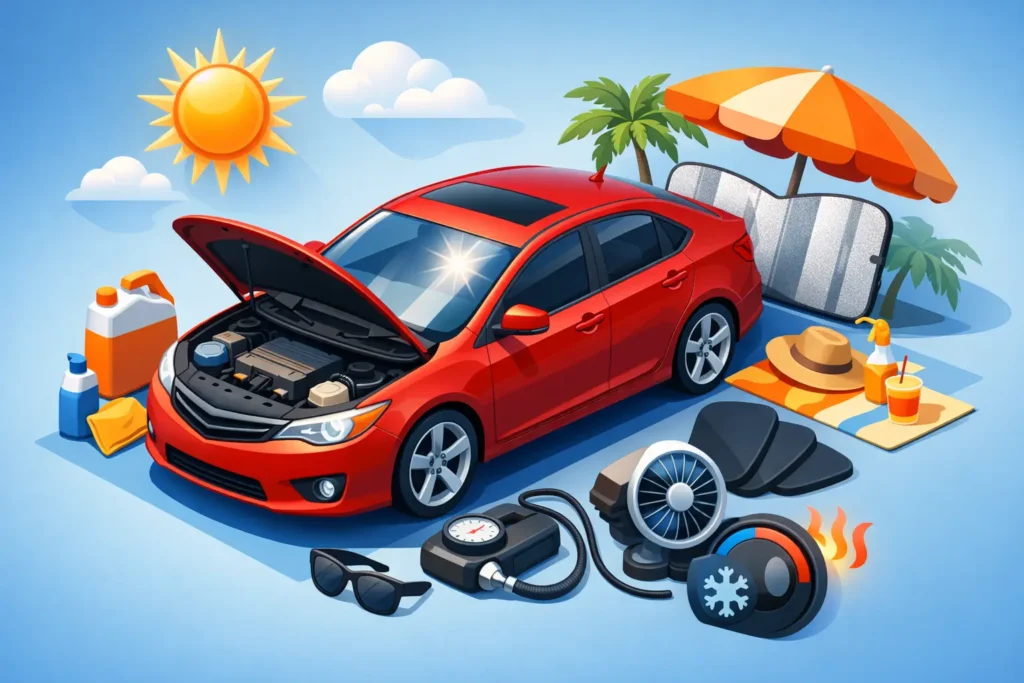
A Texas summer can turn a small vehicle issue into a roadside problem fast. If you are wondering how to prepare car for summer heat, the best approach is to handle the basics before high temperatures put extra stress on your engine, battery, tires, and air conditioning.
For drivers in Spring, that matters more than most people realize. Heat affects more than comfort. It changes tire pressure, accelerates battery wear, pushes cooling systems harder, and exposes weak belts, hoses, and fluids. A car that feels mostly fine in mild weather can start showing real trouble once the temperature climbs.
The smartest time to service your vehicle is before the first truly hot stretch, not after your temperature gauge rises in traffic. Summer prep is really about reducing strain on the systems that work hardest in extreme heat.
That starts with your cooling system. Your engine creates a lot of heat on its own, and in summer it has less room for error. If coolant is low, old, or contaminated, your vehicle may struggle to regulate temperature. A small leak, a weak radiator cap, or a worn hose can go from minor to urgent in a hurry. If you have noticed the engine running warmer than usual, a sweet smell under the hood, or puddles under the vehicle, those are signs to get it checked right away.
Air conditioning is the next big one. In Texas, AC is not a luxury. It is part of safe, comfortable driving, especially for families, commuters, and anyone spending time in traffic. Weak airflow, air that never gets fully cold, odd smells, or noises when the AC runs can all point to a system that needs service. Sometimes the fix is straightforward. Sometimes it involves leaks, worn components, or refrigerant issues. Either way, waiting usually does not improve the outcome.
Summer heat does not impact every part of your car equally. Some parts take the hit first, and those deserve priority.
Many drivers associate battery failure with winter, but heat is often the real cause of battery damage. High temperatures can evaporate battery fluid and shorten battery life, especially if the battery is already aging. Corrosion on the terminals, slow starts, dim lights, or electrical inconsistency are all worth taking seriously.
If your battery is a few years old, testing it before summer is a smart move. Replacing a weak battery on your schedule is usually far easier than dealing with a no-start situation in a parking lot on a 100-degree afternoon.
Hot pavement and changing air pressure make tires more vulnerable in summer. Underinflated tires run hotter, wear faster, and increase the risk of a blowout. Overinflation can also reduce traction and create uneven wear. That is why tire pressure should be checked regularly, not guessed at by appearance.
Tread depth matters too. Summer storms can hit hard in Texas, and worn tires struggle in both heat and heavy rain. If your tires are wearing unevenly, your alignment may also need attention. That is one of those issues that can seem minor until it starts costing you in tire life and handling.
Coolant gets most of the attention in summer, but it is not the only fluid that matters. Engine oil, brake fluid, transmission fluid, and power steering fluid all play a role in how well your vehicle handles heat and daily driving stress.
If fluids are low, dirty, or overdue for service, your car may not perform as well when temperatures rise. This is especially true for drivers who do a lot of stop-and-go commuting, carry passengers regularly, or take longer road trips during the season. Maintenance schedules are not all identical, so the right interval depends on your vehicle, mileage, and driving habits.
A good summer inspection is not about overcomplicating things. It is about checking the areas most likely to cause trouble and addressing them while the repair is still manageable.
Start with a visual look under the hood. Belts should not be cracked or frayed, and hoses should not feel brittle, swollen, or soft. These components age over time, and summer heat can push weak parts past their limit.
Pay attention to your windshield wipers and washer fluid too. Summer in Texas is not just heat. It also brings dust, bugs, glare, and sudden downpours. If your wipers streak or chatter, replacing them is a simple fix that improves visibility right away.
Your brakes deserve a check as well. Heat can make existing brake issues more noticeable, especially if you hear squealing, grinding, or feel vibration when stopping. If your family vehicle or work car is carrying a lot of miles, it is worth making sure the brake system is in solid shape before summer travel picks up.
Lights are another easy item to overlook. Headlights, brake lights, and turn signals all matter for safety, particularly during summer storms and evening driving. Replacing a bulb is simple, but catching the issue early matters.
Not every summer vehicle problem arrives with a dramatic breakdown. A lot of them start small.
If your temperature gauge creeps higher than normal, your AC cools unevenly, your car hesitates on startup, or you notice a burning smell after driving, those are signals that something is changing. The same goes for vibrations, tire wear that looks unusual, or dashboard warning lights that come and go.
It can be tempting to wait if the car is still running. But summer heat is hard on borderline parts. What feels like a minor annoyance in the morning can turn into a serious issue by late afternoon traffic.
There is also a difference between a quick check and a full diagnostic. Some concerns are obvious, like low tire pressure or worn wiper blades. Others need professional inspection to pinpoint the real cause. If a vehicle is overheating, leaking fluid, or struggling to cool the cabin, guessing can waste time and money.
There is no single checklist that fits every vehicle perfectly. A newer car with low mileage may need only a few routine services. An older vehicle, a high-mileage commuter, or a car that has missed regular maintenance may need more attention before summer really settles in.
Driving habits matter too. A parent making short trips around town, a commuter sitting in traffic every day, and a driver planning highway travel will all place different demands on the vehicle. That is why service recommendations should match how the car is actually used, not just a generic timeline.
For many drivers, the most cost-effective approach is preventive maintenance. Replacing a worn hose, correcting tire pressure, servicing the AC, or testing a weak battery early is usually much easier than dealing with towing, missed work, or emergency repairs later. At a neighborhood shop like 360 Auto, that kind of practical maintenance is exactly what helps customers stay ahead of seasonal breakdowns.
Once your vehicle is ready, a few habits can help it handle the season better. Try to park in the shade when possible, use a sunshade to reduce cabin heat, and avoid ignoring changes in how the vehicle sounds or feels. Checking tire pressure every month is worth the time, especially during long stretches of extreme heat.
It also helps to keep basic emergency items in the car, such as water, a phone charger, and roadside essentials. That will not prevent a repair issue, but it can make an unexpected delay much easier to manage.
Summer car care is not about doing everything at once. It is about paying attention to the systems that matter most in hot weather and taking action before heat exposes a weak spot. A little preparation now can mean fewer surprises, safer driving, and a more comfortable season behind the wheel.
If your car has been overdue for maintenance or has shown even small signs of trouble, now is a good time to get ahead of it. In Texas heat, small issues rarely stay small for long.


