
- July 23, 2026
- By
- In Brakes
- 1
- 0
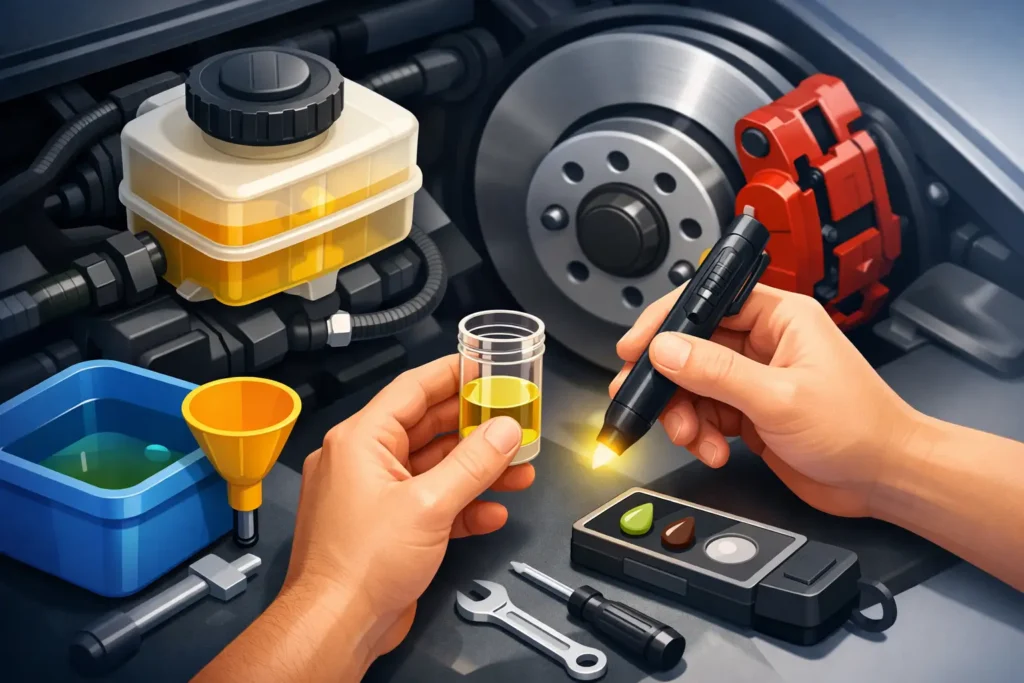
A brake pedal that suddenly feels soft on the way to work, school, or the grocery store deserves attention. Knowing how to tell brake fluid condition can help you spot a maintenance need early, but it also helps you recognize when a brake issue should not wait. Brake fluid is easy to overlook because it sits in a small reservoir under the hood, yet it plays a direct role in every stop your vehicle makes.
Unlike engine oil, brake fluid does not simply lubricate parts. It transfers the force from your brake pedal to the braking system at each wheel. When the fluid is old, contaminated, low, or leaking from the system, your vehicle may not brake as consistently as it should. A quick visual check is useful, but the most reliable answer comes from pairing what you see with the vehicle’s service history and a professional test.
Start with the brake fluid reservoir, usually located near the back of the engine compartment on the driver’s side. It is commonly a small, translucent plastic container with a black cap marked with a brake warning symbol or the required fluid type. Check your owner’s manual if you are unsure which reservoir is which.
Look through the side of the reservoir rather than opening it right away. The fluid should be between the MIN and MAX markings. A level below MIN needs attention, especially if a brake warning light is on or the pedal feel has changed. Low fluid can occur as brake pads wear, but it can also indicate a leak. It is not a problem to cover up by simply adding fluid without finding out why the level dropped.
Keep the area around the cap clean. Dirt, moisture, and the wrong type of fluid can create bigger problems in a hydraulic brake system. If you need to remove the cap for an inspection, use a clean cloth around the reservoir, avoid touching the fluid, and secure the cap promptly afterward. Brake fluid can damage painted surfaces, so wipe up any spill immediately.
Fresh glycol-based brake fluid is usually clear to light amber. As it ages, it often becomes darker amber, brown, or tea-colored. Very dark fluid, visible debris, or a cloudy appearance are all good reasons to have the system inspected and likely flushed.
Color is a useful warning sign, not a complete test. Some fluid can darken from normal heat cycles, and reservoir plastic can make fluid look darker than it really is. Conversely, fluid may still look reasonably clean while carrying too much absorbed moisture. A qualified technician can test the fluid’s moisture content and boiling-point performance rather than making the decision from color alone.
Most passenger vehicles use DOT 3, DOT 4, or DOT 5.1 brake fluid. These are glycol-based fluids, which means they naturally absorb moisture from the air over time. That is why a sealed brake system still needs periodic fluid service.
As water content rises, the fluid’s boiling point falls. During repeated hard braking, such as heavy highway traffic, towing, or driving through hilly areas, overheated fluid can form vapor. Vapor compresses much more than fluid, which can lead to a spongy pedal and reduced braking response. Moisture can also encourage corrosion inside brake lines, calipers, wheel cylinders, and the anti-lock brake system.
Brake fluid test strips and electronic testers are available, but they should be viewed as screening tools. Results can vary with the tester, the fluid type, and how the sample was taken. A shop test that includes a proper visual inspection, fluid evaluation, and brake system check gives you a clearer picture.
The way the pedal feels is often more meaningful than the color of the fluid. With the engine running, your brake pedal should feel firm and predictable. It may move slightly when the engine starts because the brake booster is working, but it should not slowly sink toward the floor while you hold steady pressure.
A soft, spongy, unusually low, or sinking pedal may point to air in the lines, moisture-contaminated fluid, a hydraulic leak, worn brake components, or a failing master cylinder. These concerns require a professional inspection. Do not assume a fluid flush alone will correct a pedal that feels unsafe.
Pay attention to changes in normal driving as well. Longer stopping distances, a brake warning light, pulling to one side, a burning smell near a wheel, grinding noises, or fluid beneath the vehicle all deserve prompt service. Brake fluid is generally clear to amber, so a wet spot near a tire or under the master cylinder area should be checked rather than ignored.
Your owner’s manual provides the best baseline for brake fluid replacement intervals. Many vehicles benefit from a brake fluid flush about every two to three years, while some manufacturers specify service by time, mileage, or fluid testing. Climate, driving habits, and vehicle use can change the right interval.
For example, a family vehicle used for short trips around Spring may have different needs than a truck that tows regularly or a commuter that spends hours in stop-and-go traffic. Heat and frequent braking place more demand on the fluid. If you bought a used vehicle and cannot verify when the brake fluid was last changed, an inspection is a sensible next step.
A fluid flush is more than removing fluid from the reservoir and adding fresh fluid on top. Proper service removes old fluid throughout the hydraulic system, replaces it with the manufacturer-specified fluid, and checks for leaks, worn pads, damaged hoses, and other concerns. This matters because the oldest, most contaminated fluid is often farther down in the system, not just in the reservoir.
Always use the fluid specification printed on the reservoir cap or listed in the owner’s manual. DOT 3, DOT 4, and DOT 5.1 are not interchangeable in every situation, even though they are glycol-based. The manufacturer selected a fluid based on the braking system’s design, operating temperatures, and seal materials.
DOT 5 is different. It is silicone-based and should not be mixed with glycol-based brake fluid. Using the wrong product can damage components and create costly brake repairs. If there is any doubt about what is already in the system, let a technician identify the correct service procedure.
Schedule a brake inspection soon if the fluid looks very dark or dirty, the level is low, the maintenance interval has passed, or you do not know the vehicle’s brake fluid history. Schedule it immediately if the brake warning light stays on, the pedal feels soft or sinks, you see a possible leak, or braking performance changes.
At 360 Auto, technicians can inspect the condition of your brake fluid along with pads, rotors, lines, calipers, and related components. That full-system approach helps prevent a simple maintenance need from becoming a safety concern or a larger repair later.
Your brakes should feel predictable every time you press the pedal. If something looks different, feels different, or has simply been overdue for too long, having it checked now is a practical way to protect your passengers and keep your daily routine moving.


