
- April 30, 2026
- By
- In Brakes
- 13
- 0
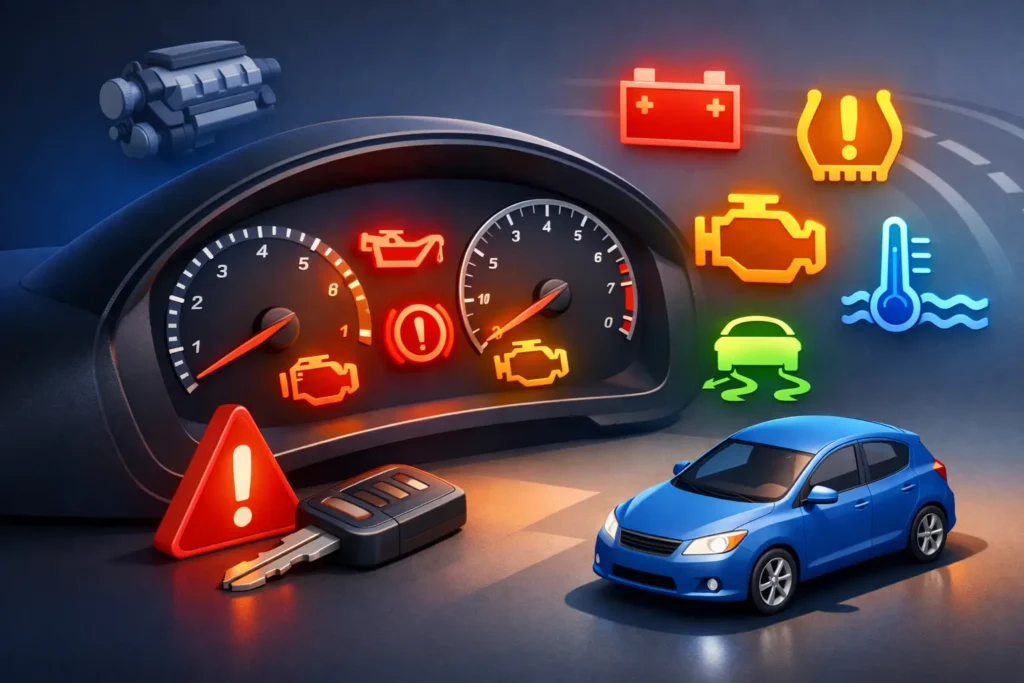
That light on your dash never seems to come on at a convenient time. It shows up on the way to work, during school pickup, or right before a weekend trip. A good dashboard warning lights guide helps you decide what needs immediate attention, what can wait a little, and when it is smartest to have a professional take a look.
Modern vehicles are built to warn you early, but the light itself does not always tell the full story. One symbol can point to a minor issue, or it can be the first sign of a larger repair if it is ignored. The key is knowing how to respond without guessing.
The first thing to pay attention to is color. In most vehicles, red means stop as soon as it is safe and address the problem right away. Yellow or amber usually means caution – the car may still be drivable, but it should be checked soon. Green or blue lights are typically informational, such as headlights or cruise control being on.
A second detail that matters is whether the light is steady or flashing. A steady light often means a fault has been detected and needs service. A flashing light usually means the issue is more urgent. For example, a flashing check engine light can indicate an active misfire that may damage the catalytic converter if you keep driving.
Your owner’s manual is still the best source for the exact symbol used in your vehicle. Automakers vary, and some warning lights combine icons with text messages. Still, there are common lights every driver should recognize.
Red lights are your car’s way of saying something needs attention now. That does not always mean the vehicle is about to fail on the spot, but it does mean you should treat it seriously.
This light usually looks like an old-style oil can. It does not mean you simply need an oil change. It means oil pressure may be too low to properly lubricate the engine. Driving with low oil pressure can cause major engine damage quickly.
If this light comes on, pull over safely, turn the engine off, and check the oil level if you are able to do so safely. If the oil level is low, that may be part of the issue. If the level looks normal, the problem could be a failing oil pump, sensor, or internal engine issue. Either way, this is not one to brush off.
This light often looks like a thermometer over waves. It signals the engine may be overheating. That can happen because of low coolant, a leak, a bad thermostat, a failed water pump, or cooling fan problems.
If the temperature light comes on, turn off the air conditioning and, if needed, turn on the heater to pull some heat from the engine while you find a safe place to stop. Do not open a hot radiator cap. Let the vehicle cool down before anyone checks the cooling system.
A brake light may appear as the word BRAKE, an exclamation point, or a circle symbol. Sometimes it simply means the parking brake is still engaged. Other times it points to low brake fluid, worn brake components, or a hydraulic system problem.
If braking feels soft, spongy, or less responsive, do not keep driving unless absolutely necessary to reach a safe location. Brake issues can change fast from manageable to dangerous.
This light usually looks like a battery symbol. It often means the battery is not charging properly, which can be caused by a bad alternator, weak battery, damaged wiring, or a slipping belt.
Your car may continue running for a short time, but electrical systems can start shutting down once battery voltage drops. If this light comes on with dim headlights, strange electrical behavior, or a hard steering feel in some vehicles, get it checked as soon as possible.
Yellow lights usually allow a little more time, but they still deserve attention. Waiting too long can turn a small fix into a larger repair bill.
This is the light drivers ask about most, and for good reason. It can come on for something as simple as a loose gas cap or as serious as an ignition, emissions, fuel, or sensor problem.
If the check engine light is steady and the vehicle feels normal, you can usually drive for a short period while scheduling diagnostics. If it is flashing, that is different. Reduce speed, avoid hard acceleration, and have the vehicle inspected right away.
This light looks like a horseshoe with an exclamation point. It means one or more tires may be underinflated, though in some cases it can also point to a sensor issue.
Low tire pressure affects handling, fuel economy, and tire wear. It is also common during sudden temperature changes. Check pressure with a gauge rather than relying on a visual guess. An underinflated tire may not always look obviously low.
The ABS light indicates an issue with the anti-lock braking system. Your standard brakes may still work, but the anti-lock function may not engage properly during hard braking or slick road conditions.
That is an important difference. The car may feel fine in normal traffic, but emergency stopping performance could be reduced. It is a good idea to have the system tested before bad weather or a longer drive.
This light may flash briefly when the system is actively helping maintain traction, which is normal. If it stays on, the system may have a fault. In some cases, this can be related to wheel speed sensors, steering angle sensors, or ABS components.
The vehicle may still drive normally, but support systems designed to help during slippery or sudden maneuvers may be limited.
Some lights are less urgent but still worth understanding. A maintenance reminder, for example, is not the same as a fault light. It usually means your vehicle is due for routine service such as an oil change, tire rotation, or inspection.
An airbag light is another one drivers should not ignore. The vehicle may seem fine, but if that light stays on, the supplemental restraint system may not function properly in a crash. That is a safety issue, even if nothing feels different during daily driving.
A washer fluid light is simple enough, but it still matters. If you are heading into rain, highway traffic, or bug-heavy driving, low washer fluid can become a visibility problem fast.
A calm response is usually the best one. Notice the color, whether the light is steady or flashing, and whether the car feels different. If you hear unusual noises, smell something burning, see steam, or notice loss of power, pull over as soon as it is safe.
If the vehicle seems to drive normally and the light is yellow, you may be able to continue short-term. That does not mean ignore it for weeks. Warning lights exist to catch problems early, when repairs are often simpler and less expensive.
If more than one warning light appears at the same time, the cause may be connected. A charging problem, for example, can trigger multiple electrical warnings. That is one reason professional diagnostics matter. Replacing parts based on guesswork can waste money and still leave the real issue unresolved.
This is where a practical dashboard warning lights guide meets real-world car care. Dashboard lights are alerts, not final diagnoses. The symbol points you in a direction, but testing confirms the actual cause.
A check engine light might trace back to a minor sensor issue, but it could also reveal a misfire, vacuum leak, or fuel delivery problem. A brake light might be low fluid because of normal pad wear, or it might point to a leak. The difference matters for both safety and cost.
Having a trained technician inspect the vehicle early often helps prevent breakdowns, protects other components, and gives you a clearer repair plan. That is especially important if your car is your daily transportation for work, errands, or getting the family where they need to go.
There are times when continuing to drive is simply not worth the risk. If the engine is overheating, oil pressure drops, the brake system feels unsafe, or the vehicle loses power suddenly, stop driving. The same goes for heavy smoke, strong burning smells, or severe shaking.
For drivers in Spring and the surrounding area, dependable local service makes a difference when something unexpected happens. Shops like 360 Auto can help take the guesswork out of warning lights with inspections, diagnostics, and repair recommendations you can understand.
Dashboard lights are your car asking for attention before a bigger problem takes hold. If a warning light comes on and you are unsure what it means, trust the signal, play it safe, and get answers before the road makes the decision for you.


