
- July 29, 2026
- By
- In Brakes
- 3
- 0
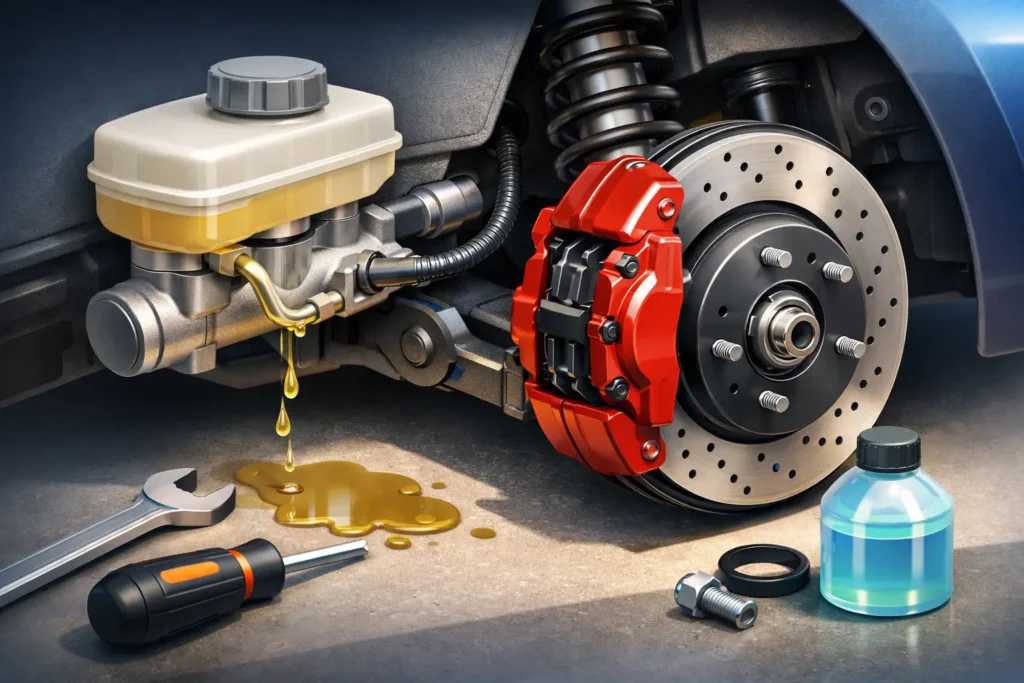
A brake pedal that suddenly feels soft is not a problem to put off until next week. This brake fluid leak repair example shows how a small leak near one wheel can affect the entire braking system, why the visible fluid is only part of the diagnosis, and what a proper repair should include. For Spring drivers who depend on their vehicle for work, school, and daily errands, prompt brake service protects more than a schedule – it protects the people in the vehicle.
Imagine a driver notices a small clear-to-amber puddle near the front driver-side tire after parking overnight. At first glance, it could be water from the air conditioning system. But the brake fluid reservoir is below the minimum line, and the brake pedal travels farther toward the floor than usual. Those signs point to a possible brake fluid leak.
During inspection, a technician may find wetness around the flexible brake hose where it joins the front caliper. The hose can crack with age, suffer outside damage, or leak at a corroded fitting. In this example, the hose itself is leaking near the crimped connection. Brake fluid has reached the caliper, backing plate, and brake pads.
The correct repair is not simply topping off the reservoir and sending the vehicle down the road. The technician replaces the failed hose, inspects the matching hose and nearby hard brake line for corrosion or damage, and checks the caliper for signs of a damaged seal. Because brake fluid can soak into pad material and reduce consistent braking performance, the contaminated pads must be replaced. The rotor is inspected and serviced or replaced based on its condition and manufacturer specifications.
Once the damaged parts are addressed, the system is refilled with the brake fluid specified for that vehicle. The technician bleeds the brakes to remove air, checks for leaks under pressure, verifies proper pedal feel, and performs a controlled road test when appropriate. That final verification matters. A brake repair is complete only when the system holds pressure and delivers dependable stopping power.
Brake systems use hydraulic pressure. When you press the pedal, brake fluid transfers that pressure through lines and hoses to the calipers or wheel cylinders, which apply the brakes. A leak lowers the amount of fluid available and can allow air into the system. Unlike brake fluid, air compresses. The pedal may feel spongy, sink lower than normal, or require extra force before the vehicle slows.
A slow leak can be especially misleading because braking may feel mostly normal at first. The fluid level drops gradually, and a warning light may not appear until the situation has worsened. Heat, vibration, road debris, and time can turn a minor seep into a larger leak without much warning.
There is also a practical concern: brake fluid can damage painted surfaces and certain rubber components. Letting it sit on parts of the vehicle can create additional expense beyond the original failed component.
Not every brake concern is caused by fluid loss. Worn pads, warped rotors, a sticking caliper, or a brake booster issue can produce different symptoms. Still, several warning signs should lead to a professional inspection as soon as possible.
Watch for a brake warning light, a low brake fluid reservoir, a soft or sinking brake pedal, fluid near a wheel, or wetness along brake lines under the vehicle. You may also notice that the vehicle pulls to one side while braking, requires more distance to stop, or feels inconsistent from one stop to the next.
Brake fluid is usually clear to light amber when new and gets darker as it ages. It can feel slick but is not the same as engine oil. Because several vehicle fluids can drip in similar areas, trying to identify the source by appearance alone is not always reliable. A trained inspection can locate the leak without guessing.
If the pedal goes close to the floor, braking performance changes suddenly, or the brake warning light comes on, do not continue normal driving. Pull over safely and arrange for professional assistance. A roadside tow is far less costly than risking a collision or turning a repairable issue into a major brake system repair.
A complete inspection looks beyond the obvious wet spot. The leaking part may be a hose, steel line, caliper, wheel cylinder, master cylinder, fitting, or ABS-related component. In some cases, fluid loss is internal and there may be no puddle at all.
Technicians start by checking the reservoir level and condition, then inspect the master cylinder, brake lines, flexible hoses, calipers, wheel cylinders, and connections. Wheels may need to come off to see the components clearly. Rust is a particular concern on older vehicles, since corrosion can weaken steel lines where they run along the underbody.
The inspection also considers why the issue occurred. If one brake hose is cracked due to age, the opposite-side hose may be approaching the same condition. Replacing only the failed item can be the right choice when the rest of the system checks out. When matching components show similar wear, replacing them as a pair may offer better long-term value and more balanced performance.
There is no single price for a brake fluid leak repair because the failed part and related damage make a major difference. Replacing a hose or fitting is generally less involved than replacing corroded brake lines that run the length of the vehicle. A leaking caliper can also require pads, rotors, and hardware if brake fluid has contaminated those components.
The most affordable repair is usually the one handled early. Waiting can lead to low fluid, air in the hydraulic system, damaged friction material, and a broader safety concern. A transparent repair estimate should explain the source of the leak, the parts that need replacement, the condition of related components, and the testing performed after the repair.
Ask questions if anything is unclear. A dependable repair shop should be able to explain whether a part is leaking, merely showing age, or recommended as preventive service based on its condition. That information helps you make a confident decision without unnecessary surprises.
The safe answer is no. The severity can vary, but there is no reliable way to predict when a small leak will become a loss of braking pressure. Adding fluid may temporarily raise the reservoir level, but it does not repair the damaged hose, line, seal, or fitting. It can also create a false sense of security while the leak continues.
Avoid relying on a parking brake as a substitute for normal hydraulic brakes. The parking brake is designed primarily to hold a parked vehicle and may not provide controlled stopping in an emergency. If you suspect a leak, have the vehicle inspected rather than taking chances on a commute or family trip.
Routine brake inspections make leaks easier to catch before they create an urgent situation. During regular maintenance, a technician can check fluid level and condition, inspect visible hoses and lines, measure brake pad wear, and look for moisture around calipers or wheel cylinders. This is especially useful for vehicles that see heavy stop-and-go traffic, frequent towing, or years of Gulf Coast heat and humidity.
At 360 Auto, the goal is straightforward: identify the real issue, explain the repair clearly, and help you get back on the road with confidence. If your brake pedal feels different or you see fluid near a wheel, schedule an inspection promptly. Your vehicle gives you warning signs for a reason, and acting on them is one of the best ways to protect every mile ahead.


