
- July 13, 2026
- By
- In Brakes
- 3
- 0
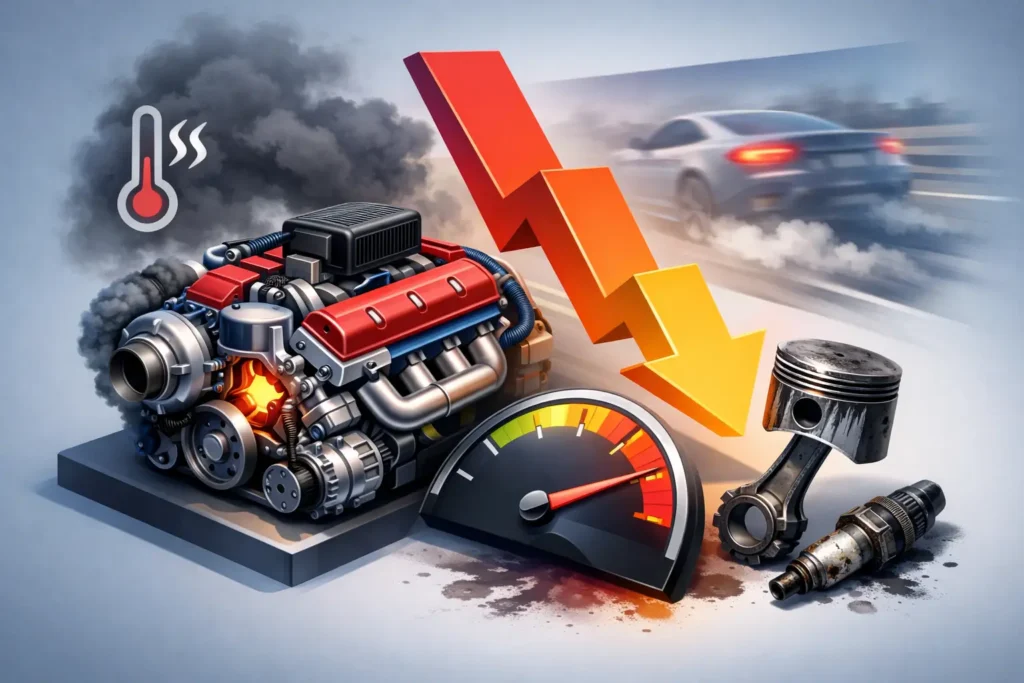
A vehicle that feels slow to accelerate, struggles up hills, or burns more fuel than usual is telling you something. The top reasons engines lose performance range from routine maintenance needs to fuel, air, ignition, and sensor problems. Catching the cause early can protect your engine, avoid a roadside breakdown, and help keep repair costs under control.
Engine performance depends on a precise balance of clean air, fuel, spark, compression, and correct timing. When one part of that system falls behind, the vehicle may still start and drive, but it will not feel like it should. Some issues develop gradually, while others show up suddenly with a warning light, rough idle, or major loss of power.
The good news is that many performance concerns can be found with a professional inspection and accurate diagnostics. Here are the most common causes and what drivers in Spring, Texas, should watch for.
Your engine needs a steady supply of clean air to produce power efficiently. The air filter keeps dirt, dust, and debris out of the engine, but over time it becomes clogged. When airflow is restricted, the engine may feel sluggish during acceleration and use more fuel than normal.
A dirty filter is often a straightforward maintenance item, but it should not be ignored for years. Texas heat, construction dust, frequent stop-and-go driving, and unpaved roads can all cause a filter to get dirty sooner. Replacing it at the right interval helps your engine breathe easier and supports better fuel economy.
Spark plugs ignite the air-fuel mixture inside each cylinder. When plugs are worn, fouled, or damaged, combustion becomes inconsistent. You may notice hesitation when accelerating, a rough idle, shaking at a stoplight, or a check engine light.
A single misfire can feel minor at first, but repeated misfires place extra stress on the ignition system and can damage the catalytic converter. Spark plug replacement schedules vary by vehicle and plug type, so it is best to follow your manufacturer’s maintenance plan rather than wait for a noticeable problem.
Fuel injectors, the fuel pump, fuel filter where applicable, and fuel lines all play a role in delivering the right amount of fuel. A clogged injector may disrupt the spray pattern needed for efficient combustion. A weak fuel pump may not maintain enough pressure when the engine needs more power, such as when merging onto the highway or climbing a grade.
Fuel-related issues can resemble ignition or air intake problems, which is why guessing can lead to unnecessary repairs. A qualified technician can test fuel pressure, inspect system data, and determine whether cleaning, repair, or component replacement is appropriate.
Oil changes are not just about protecting internal engine parts. Old, low, or incorrect engine oil can contribute to poor operation, increased friction, and accelerated wear. If oil is leaking, being burned, or overdue for service, an engine may run hotter and lose efficiency over time.
Other neglected maintenance items matter as well. Cracked belts, worn hoses, coolant leaks, and a failing thermostat can lead to overheating. An overheated engine can lose power quickly and may suffer serious damage if it is driven too long. If the temperature gauge rises, steam appears from under the hood, or you smell coolant, pull over safely and have the vehicle checked.
Modern vehicles rely on sensors to adjust fuel delivery, ignition timing, airflow, and emissions controls. Sensors such as the mass airflow sensor, oxygen sensor, throttle position sensor, and engine coolant temperature sensor help the engine computer make those adjustments.
When a sensor sends inaccurate readings, the computer may add too much or too little fuel. The result can be weak acceleration, poor fuel mileage, rough running, or an illuminated check engine light. Because many sensor problems create similar symptoms, diagnostic testing is more dependable than replacing parts based on suspicion.
Exhaust gases need to leave the engine freely. A damaged or clogged catalytic converter, crushed exhaust pipe, or internal muffler failure can create backpressure that limits performance. Drivers often describe this issue as a vehicle that feels like it cannot breathe or accelerate beyond a certain point.
Exhaust restrictions may also bring a sulfur-like smell, excessive heat under the vehicle, or a check engine light. This is not a problem to put off. The underlying cause may involve repeated misfires, an incorrect fuel mixture, or another issue that needs correction along with the exhaust repair.
Not every loss of performance begins under the hood. A slipping transmission can cause the engine RPM to rise without the vehicle gaining speed as expected. Low or degraded transmission fluid, internal wear, or electronic control issues may be involved.
Dragging brakes can also make a healthy engine feel underpowered. If a brake caliper sticks, the vehicle has to work harder to move. A burning smell, pulling to one side, unusually hot wheels, or reduced fuel economy may point to a brake concern. These issues deserve prompt attention because they affect both performance and safety.
A steady check engine light means the vehicle needs diagnosis soon, even if it still drives normally. A flashing check engine light is more urgent and often signals an active misfire that can damage the catalytic converter. Reduce speed, avoid hard acceleration, and arrange for service as soon as possible.
You should also stop driving when performance loss comes with overheating, heavy smoke, knocking sounds, an oil pressure warning light, or a major fuel smell. Continuing to drive may turn a repairable issue into significant engine damage. When in doubt, roadside assistance or a tow is usually the safer and more affordable choice.
A loss of power is frustrating because the symptoms can overlap. For example, hesitation may come from worn spark plugs, a fuel delivery issue, a vacuum leak, a dirty air sensor, or a restricted exhaust. Replacing parts one at a time without testing can add cost without solving the problem.
A thorough diagnostic appointment starts with listening to what the vehicle is doing and when it happens. Is the problem worse when cold, under load, after refueling, or only when the air conditioning is running? Technicians can scan trouble codes, review live engine data, inspect key components, and test the systems that matter before recommending repairs.
That approach gives you a clearer explanation of the problem, the priority of the repair, and the options available. It also helps separate urgent safety concerns from maintenance items that can be scheduled appropriately.
If your car no longer feels responsive or reliable, do not wait for a small performance issue to become a missed workday or a family trip interruption. The team at 360 Auto can inspect the concern, explain the findings clearly, and help you get back on the road with confidence.


