
- May 12, 2026
- By
- In Brakes
- 11
- 0
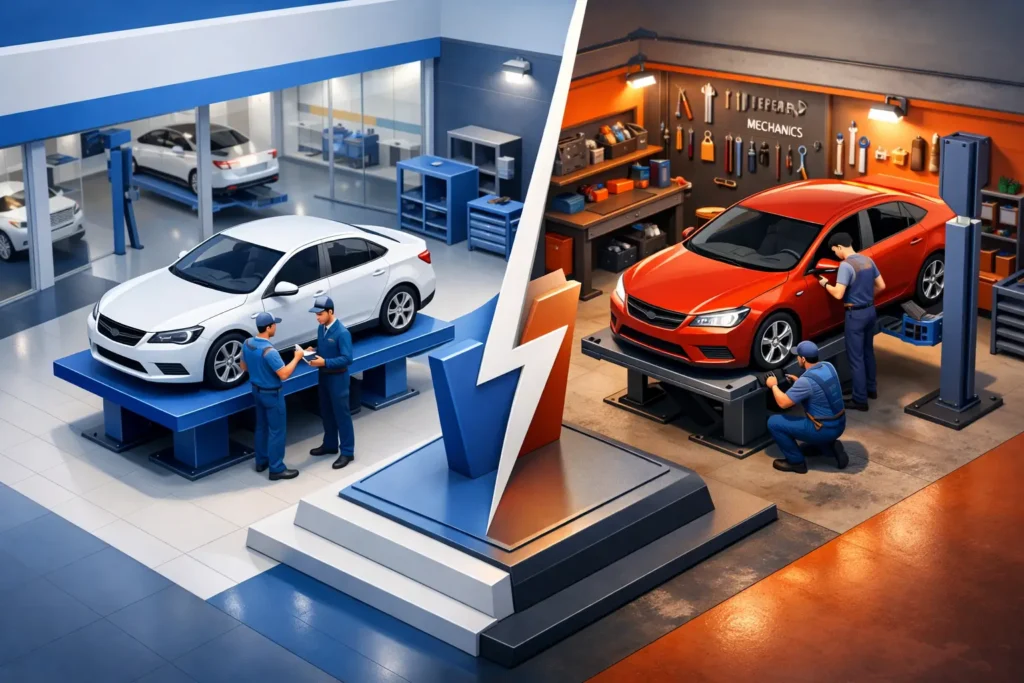
You hear a new noise, a warning light comes on, or your car is due for service, and the same question pops up fast: dealer vs independent mechanic. For most drivers, this is not really about brand loyalty. It is about getting the job done right, paying a fair price, and getting back on the road without extra stress.
The good news is that both options can make sense. The better choice depends on your vehicle, the repair, your warranty situation, and how much you value personal service versus manufacturer-specific processes. If you know the strengths of each, the decision gets much easier.
A dealership service department is tied to a specific manufacturer. That usually means factory-trained technicians, brand-specific diagnostic tools, and direct access to original equipment parts for that make. If you drive a newer Ford, Toyota, Honda, or Chevy, the dealer is built around that brand’s systems and procedures.
An independent mechanic works outside the dealership model and typically services many makes and models. A strong independent shop can handle everything from oil changes and brake work to diagnostics, tires, air conditioning service, belts, hoses, and major repairs. For many local drivers, that flexibility is a major advantage because one trusted shop can take care of the whole household fleet.
The real difference often comes down to specialization versus relationship. Dealers specialize in one manufacturer. Independent shops often build long-term trust by offering broader service, more direct communication, and pricing that fits everyday budgets better.
There are times when the dealer is the clear choice. If your vehicle is still under a factory warranty, warranty-covered repairs often need to go through an authorized dealership. The same is true for recalls. In those cases, the dealer has direct manufacturer support, and that can save you money.
Dealers can also be a smart option for highly specialized repairs on newer vehicles with very brand-specific systems. Some advanced programming, software updates, or model-specific electrical concerns may be handled more efficiently there, especially if the issue is uncommon and tied closely to factory service bulletins.
If you drive a luxury vehicle or a very new model with limited aftermarket information available, a dealer may also have an edge. Their technicians see the same vehicles every day, and that repetition can matter when a problem is unusual.
That said, dealer service is not automatically better across the board. It is often more expensive, and the customer experience can feel less personal. For routine maintenance and many common repairs, the added cost may not translate to added value.
For a large number of drivers, an independent mechanic is the practical answer. Routine maintenance like oil changes, brake service, tire replacement, battery testing, air conditioning work, and engine diagnostics can often be done at a high level without dealership pricing.
Independent shops also tend to be easier to work with on day-to-day service. You are more likely to speak directly with the people handling your vehicle, ask questions without feeling rushed, and get a clearer explanation of what is urgent, what can wait, and what it will cost. That matters when you are balancing car care with work, school pickup, and everything else on your schedule.
Cost is another major factor. Independent shops usually have lower overhead than dealerships, and that often leads to more competitive labor rates. On a repair that is not warranty-related, that difference can be significant.
There is also the trust factor. A well-established local shop depends on its reputation in the community. It earns repeat business by being transparent, standing behind the work, and treating customers like neighbors instead of ticket numbers.
If you ask most drivers why they compare dealer vs independent mechanic, price is near the top of the list. In general, dealerships charge more for labor, and parts pricing can be higher too. Their facilities, manufacturer requirements, and operating structure all add cost.
Independent mechanics often provide more options. In many cases, you may be able to choose between original equipment and high-quality aftermarket parts, depending on the job. That flexibility can help you control the final bill without cutting corners.
Still, the lowest estimate is not always the best deal. A cheaper repair that does not solve the real issue can cost more in the long run. What matters is value: accurate diagnosis, quality parts, solid workmanship, and clear communication from the start.
This is one of the biggest myths in auto repair. In most cases, no, using an independent mechanic does not void your factory warranty. You are generally allowed to have routine maintenance and many repairs done outside the dealership as long as the work is performed properly and records are kept.
What matters is following the manufacturer’s maintenance schedule and using appropriate parts and fluids. If a repair is specifically covered under warranty, though, the dealership is usually the correct place to handle it.
If you are unsure, ask before authorizing work. A reputable shop will explain what is covered, what is not, and whether your vehicle should go to the dealer for a specific issue.
Some drivers assume dealer technicians are always more qualified. Others assume independent mechanics are more experienced because they work on everything. The truth is, both can be excellent, and both can fall short. The shop’s standards matter more than the label on the building.
A quality independent shop invests in training, diagnostic equipment, and experienced technicians who can work across many systems and brands. That broad exposure is valuable, especially for common problems that show up across multiple manufacturers.
Dealership technicians have an advantage in brand-specific familiarity. Independent shops often have an advantage in practical problem-solving and customer communication. One is not automatically better than the other. It depends on the repair and the team doing the work.
The best approach is to match the shop to the job. If your car has an open recall, factory warranty repair, or a very specialized software concern, start with the dealer. If your vehicle needs routine maintenance, brake work, tires, diagnostics, air conditioning service, or common repairs, a trusted independent shop may be the smarter and more cost-effective move.
It also helps to look at how the shop communicates. Do they explain the issue in plain language? Do they tell you what needs attention now and what can wait? Do they give you confidence that they are fixing the cause instead of guessing? Those signs matter as much as the estimate.
Convenience counts too. For busy families and commuters in Spring, Texas, the right shop is one that respects your time, offers straightforward service, and helps you stay ahead of bigger problems. That is one reason many drivers prefer a neighborhood shop that can handle most of their vehicle needs under one roof.
If your goal is to keep your car reliable for years, consistency matters more than where the first oil change happens. A shop that knows your vehicle history can spot patterns, track wear items, and help you plan repairs before they become emergencies.
That kind of long-term relationship is often where an independent shop stands out. Instead of starting fresh each visit, you have a team that understands how you drive, how many miles you put on the car, and what services are coming up next. At 360 Auto, that local relationship is a big part of how drivers stay ahead of breakdowns and avoid surprise repair costs.
The best choice is the one that gives you confidence every time you turn the key. If a dealer is the right fit for a specific warranty or factory issue, use the dealer. If you want honest guidance, competitive pricing, and dependable service for the repairs and maintenance most drivers actually need, a trusted independent mechanic can be the better road to take.


