
- May 8, 2026
- By
- In Brakes
- 11
- 0
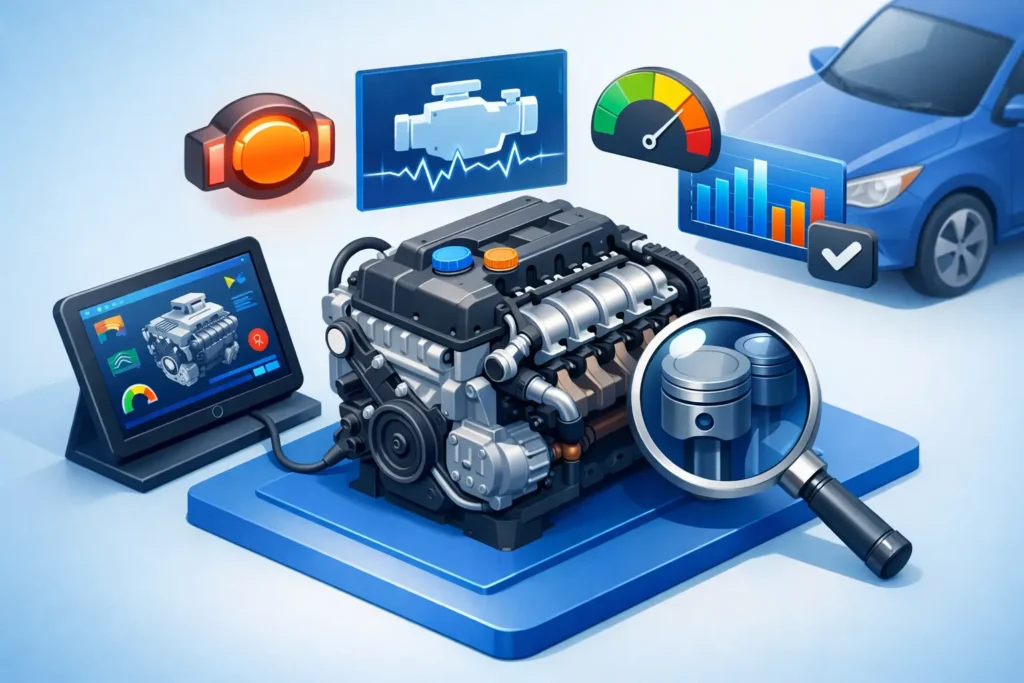
That check engine light rarely comes on at a convenient time. Maybe it appears on your way to work, during school pickup, or right before a weekend trip. An engine diagnostics service gives you a clear starting point by identifying what your vehicle is trying to tell you before a small issue turns into a bigger repair.
For many drivers, the hardest part is not knowing whether the problem is minor, urgent, or somewhere in between. The light could point to something simple like a loose gas cap, or it could signal a misfire, sensor failure, fuel system problem, or emissions issue. The point of proper diagnostics is not just to read a code and guess. It is to test, confirm, and explain what is really happening under the hood.
A professional engine diagnostics service is a process, not a single scan. Modern vehicles store trouble codes when the system detects a problem, but those codes are only clues. A code may identify the system affected, yet it does not always tell you which part failed or why the condition started.
That is where trained technicians make the difference. They use diagnostic equipment to communicate with your vehicle’s onboard computer, review stored and pending codes, and look at live data from sensors and control modules. From there, they check how the engine is performing in real time.
Depending on the symptom, that may include inspecting ignition components, fuel delivery, air intake, emissions systems, wiring, battery voltage, or vacuum lines. If the vehicle is running rough, stalling, hesitating, or losing fuel economy, the goal is to connect those real-world symptoms with the electronic data and verify the root cause.
A lot of drivers have seen free code scans offered at parts stores, and those can be useful as a first look. But a code reader alone is limited. It can tell you that a system flagged a problem, but it cannot replace hands-on testing and experience.
For example, a code related to an oxygen sensor does not automatically mean the sensor itself is bad. The sensor may be reporting another issue, such as a vacuum leak, fuel mixture problem, or exhaust concern. Replacing parts based on the code alone can waste time and money.
That is why a true diagnostic visit is often the smarter choice. Instead of chasing guesses, you get a more accurate answer and a clearer repair plan. For busy families and daily commuters, that matters. You want the car fixed correctly the first time, not back in the shop for the same warning light next week.
The check engine light gets most of the attention, but not every problem starts there. In some cases, your vehicle gives subtle warnings first.
If your car feels sluggish when accelerating, idles unevenly, starts hard, stalls at stoplights, or burns more gas than usual, those changes should not be ignored. Strange smells, engine vibration, reduced power, or occasional flashing dashboard lights are also worth checking. Even if the vehicle still drives, an early inspection can prevent added wear on other components.
There is also a timing factor. Some problems are cheaper to address when caught early. A small ignition issue, for example, can develop into catalytic converter damage if the engine continues misfiring. What starts as a manageable repair can become a far more expensive one if it is put off too long.
Every vehicle is different, and the cause depends on age, mileage, maintenance history, and driving conditions. Still, some problems show up often.
Faulty spark plugs and ignition coils are common sources of rough running and misfires. Sensor problems involving oxygen sensors, mass airflow sensors, or crankshaft sensors can affect performance and trigger warning lights. Fuel injectors, vacuum leaks, throttle body buildup, and EVAP system leaks also appear frequently during diagnostic work.
In some cases, the issue is mechanical rather than electronic. Low compression, timing problems, or internal engine wear can create symptoms that look like a sensor problem at first. That is another reason proper testing matters. The right diagnosis helps separate a straightforward fix from a more serious repair concern.
A good service experience should feel straightforward, not confusing. When you bring your vehicle in for diagnostics, the first step is usually a conversation about what you are seeing, hearing, or feeling while driving. Details matter here. Does the light flash or stay solid? Does the issue happen only on startup, while idling, or under acceleration? Has fuel economy changed?
After that, the technician checks the system data, performs an inspection, and follows the evidence. Sometimes the answer is found quickly. Other times, especially with intermittent problems, more testing is needed. That does not mean the process is off track. It means the shop is being careful enough to confirm the cause before recommending repairs.
Once the issue is identified, you should receive a clear explanation of what was found, what needs attention now, and what can wait if the repair is not urgent. That kind of transparency helps you make a decision with confidence.
Most drivers in Spring are not looking for technical theory. They want a vehicle that starts on time, runs safely, and gets them where they need to go without extra stress. That is where diagnostics has real value.
When the engine is running the way it should, the whole driving experience improves. You get steadier performance, better fuel efficiency, lower risk of breakdowns, and fewer surprise repairs. For households with packed schedules, reliability is not a luxury. It is part of keeping work, school, errands, and family life moving.
An engine problem also tends to affect more than one system. A rough-running engine can strain emissions components, reduce fuel economy, and create drivability issues that make the vehicle less safe or less predictable in traffic. Addressing the problem early protects both your car and your time.
Some warning signs should move to the top of your list. If the check engine light is flashing, the vehicle is shaking, power drops suddenly, or you notice severe hesitation, strong fuel smells, or overheating, it is best to have the vehicle inspected as soon as possible. A flashing light often points to an active misfire, and continued driving can cause damage.
Even a steady check engine light should not be ignored for long. The car may still feel drivable, but hidden issues can continue developing in the background. If you are unsure whether it is safe to drive, ask before assuming it can wait.
For local drivers who want honest answers and dependable workmanship, a neighborhood shop can make the process easier. 360 Auto serves Spring, Texas drivers with the kind of clear communication people want when something does not feel right with their vehicle.
Not every shop approaches diagnostics with the same level of care. The right shop combines equipment, experience, and communication. You want technicians who understand modern vehicle systems, but you also want people who explain findings in plain language.
Price matters, of course, but value matters more. A lower upfront cost does not help if the diagnosis is incomplete or the repair is based on guesswork. On the other hand, a thorough diagnostic process can save money by preventing unnecessary parts replacement and repeat visits.
It also helps to choose a shop that can handle the next step once the issue is identified. Diagnostics is only part of the picture. If the shop can inspect, repair, and help you stay ahead of future maintenance, you have a more practical long-term partner for your vehicle.
A warning light does not have to ruin your week. Sometimes the issue is simple. Sometimes it is more involved. Either way, getting clear answers early gives you a better chance to protect your vehicle, your budget, and your peace of mind.


