
- April 18, 2026
- By
- In Brakes
- 10
- 0
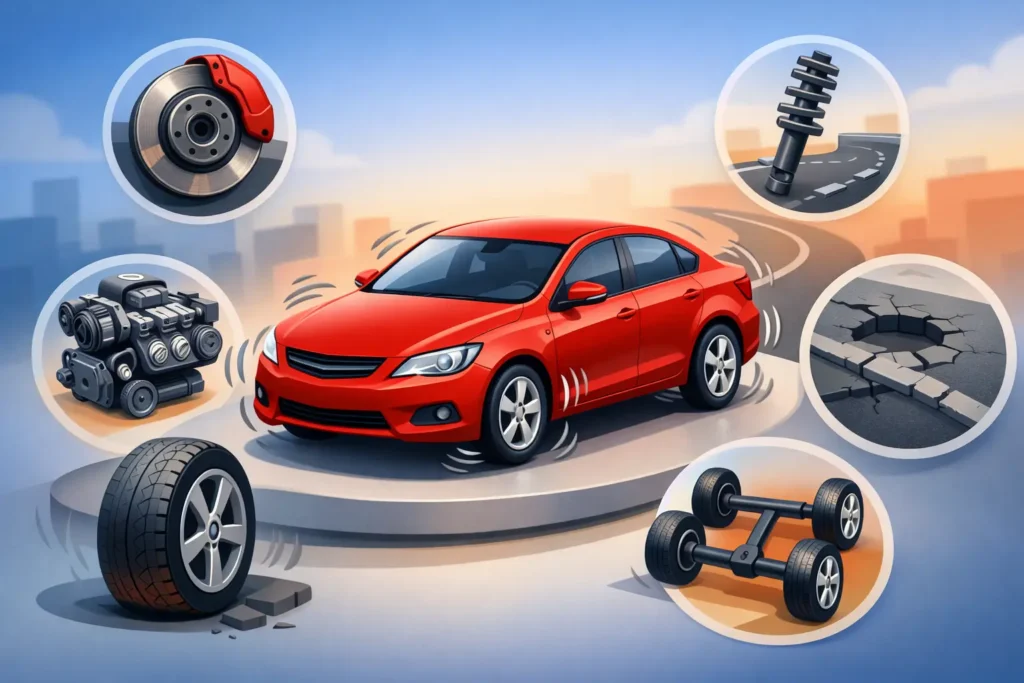
A car that suddenly starts vibrating on the way to work can turn a normal drive into a stressful one fast. If you’re asking, “why is my car shaking,” the answer depends on when the shaking happens, how strong it feels, and whether it comes with other warning signs like noise, pulling, or a flashing dashboard light.
Sometimes the fix is simple, like a tire that needs balancing. Other times, shaking points to a brake problem, engine misfire, suspension wear, or a wheel issue that should be checked right away. The key is not to guess. The pattern of the vibration usually tells you a lot about where the problem starts.
If the shaking shows up mostly at highway speeds, tires and wheels are often the first place to look. A tire that is out of balance can cause vibration through the steering wheel, seat, or floorboard, especially as speed increases. You may not notice much around town, then suddenly feel the car buzz or wobble once you reach 55 mph or more.
An unevenly worn tire can create a similar feeling. So can a bent wheel from a pothole or curb impact. In Texas, rough roads and heat can be hard on tires, and small issues tend to get worse if they are ignored. If the steering wheel shakes more than the rest of the car, the problem is often in the front tires or wheels. If you feel it more through the seat, the rear tires may be involved.
Alignment also matters, but it is often misunderstood. A poor alignment can cause uneven tire wear and make the vehicle pull to one side, yet alignment alone does not always create a strong vibration. In many cases, the real problem is a tire wear pattern caused by alignment or suspension issues over time.
If the vibration gets stronger the faster you drive, or if it started right after hitting a pothole, don’t put it off. A damaged tire or wheel can affect handling and safety. If you notice a bulge in the tire, low tire pressure, or a thumping sound, it is best to have the vehicle inspected before driving far.
Shaking during braking usually points to the brake system. Many drivers describe this as a steering wheel shimmy or a pulsing feeling when they press the brake pedal. In a lot of cases, the issue comes from worn brake components or rotors that are no longer wearing evenly.
People often say the rotors are “warped,” but the real picture can be more complicated. Rotor surface variation, uneven brake pad deposits, and heat-related wear can all lead to vibration when braking. If the shaking is mild, you might feel it only during harder stops. If it is more severe, every stoplight becomes obvious.
Brake problems should not wait. If your car shakes while braking and you also hear grinding, squealing, or notice longer stopping distances, the vehicle needs service soon. Brakes are one of those systems where a small issue can turn into a much more expensive repair if it keeps wearing unchecked.
If the car shakes while stopped at a red light or sitting in park, the problem may be under the hood rather than at the wheels. Engine misfires are a common cause. When one or more cylinders are not firing the way they should, the engine can run rough and send vibration through the whole vehicle.
This can happen because of worn spark plugs, failing ignition coils, fuel delivery problems, or air intake issues. Sometimes the check engine light comes on. Sometimes it flashes, which is more urgent and often means an active misfire that can damage the catalytic converter if you keep driving.
Motor mounts are another possibility. These mounts help secure the engine and absorb vibration. When a mount wears out or breaks, the engine’s normal movement becomes much more noticeable inside the cabin. A bad motor mount can make the car feel rough at idle, especially when the air conditioning is on or when shifting between drive and reverse.
Not every small vibration at idle means major trouble. Some vehicles naturally have a little more engine feel than others, especially older cars. The difference is whether something changed. If your car suddenly feels rougher than usual, stumbles, or shakes enough to rattle the interior, it should be checked.
A car that shakes under acceleration can point to a different set of problems. If the vibration happens as you press the gas, drivetrain components may be involved. On front-wheel-drive vehicles, worn CV axles or joints can cause shaking during acceleration, especially if the damage is more advanced.
On other vehicles, worn driveshaft components, universal joints, or transmission-related issues may be part of the problem. There is some overlap here, which is why a proper inspection matters. The same symptom can come from more than one system.
Engine performance can also show up more under load. A weak ignition coil, dirty fuel injector, or air-fuel imbalance might be less noticeable at idle and more obvious when the engine works harder. If the car hesitates, bucks, or loses power while shaking, that leans more toward an engine or fuel system issue than a simple tire balance problem.
One reason vibration complaints can be frustrating is that the cause is not always just one part. Worn suspension components can allow the tires to wear unevenly. Uneven tires can then create shaking. A loose steering part can make the vibration more noticeable through the wheel. That is why a complete diagnosis matters more than replacing parts based on a guess.
Common suspension and steering contributors include worn tie rods, ball joints, control arm bushings, and shocks or struts. These parts affect stability, tire contact, and road feel. If your vehicle shakes and also feels loose, bouncy, or unstable over bumps, the suspension should be part of the inspection.
There is no single rule for every shake or vibration. A mild tire balance issue may not create an immediate emergency, but it can still wear tires faster and make driving less comfortable. A flashing check engine light, brake-related shaking, or vibration after a hard impact is a different story.
You should stop driving and have the vehicle looked at promptly if the shaking is severe, gets worse quickly, affects braking or steering, comes with smoke or burning smells, or starts after striking road debris or a pothole. The same goes for any vibration tied to a flashing check engine light.
If the issue is mild and steady, you may be able to drive a short distance for service, but it is still smart to avoid delays. Problems rarely fix themselves. In most cases, they either stay the same for a while or become more expensive.
If you want to help speed up diagnosis, notice when the shaking happens. Does it occur at idle, only when braking, only at highway speed, or while accelerating uphill? Is it in the steering wheel, the seat, or the brake pedal? Did it start after new tires, a repair, or hitting something in the road?
Those details help narrow things down quickly. They can also prevent unnecessary repairs. A good shop will use that information along with a road test and inspection to find the real cause instead of just treating the symptom.
When your vehicle shakes, the smartest move is to treat it as a symptom, not a diagnosis. Tire balancing, brake service, engine repair, and suspension work all solve different problems. Choosing the right one starts with identifying exactly when and how the vibration occurs.
At a trusted local shop like 360 Auto, that means looking at the full picture – tires, brakes, steering, suspension, and engine performance – so you get answers that make sense and repairs that last. If your car doesn’t feel right, trust that instinct. A steady, comfortable ride is not just about convenience. It is one of the clearest signs your vehicle is ready for the road.


