
- May 16, 2026
- By
- In Brakes
- 8
- 0
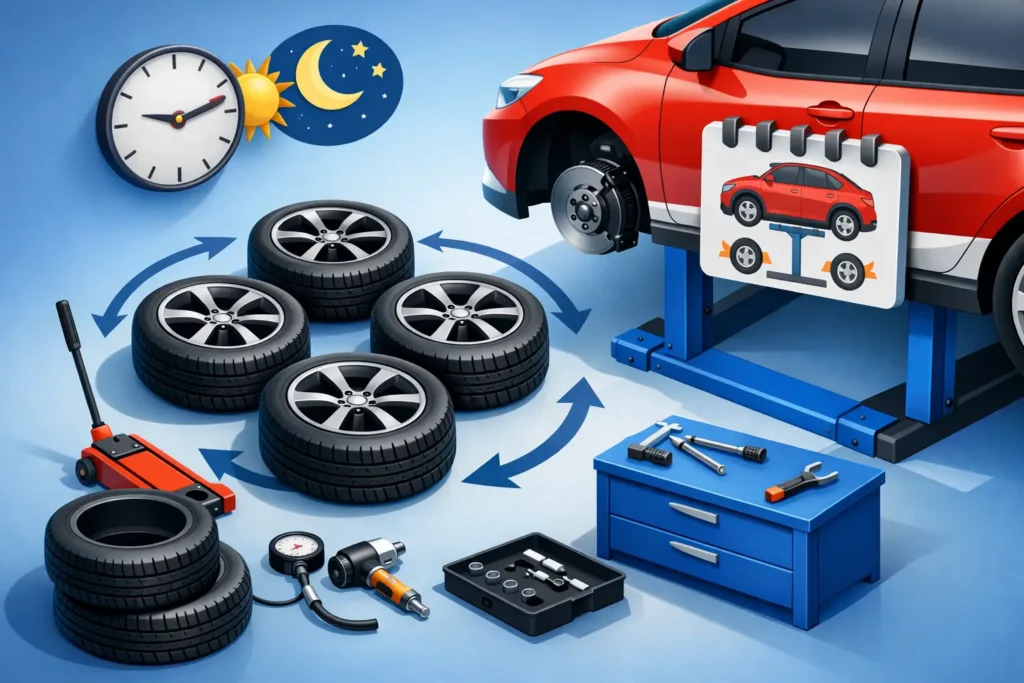
A lot of drivers only think about tire rotation after they notice uneven tread, road noise, or a pull in the steering wheel. By then, the tires may already be wearing faster than they should. If you are wondering how often to rotate tires, the short answer is usually every 5,000 to 7,500 miles, but the right schedule depends on your vehicle, your tires, and how you drive around Spring and the surrounding area.
Tire rotation is one of the simplest maintenance services you can stay on top of, and it pays off in a big way. It helps your tires wear more evenly, improves ride quality, supports safer handling, and can save you money by helping you get the full life out of your set.
For most cars, SUVs, and light trucks, tire rotation should happen every 5,000 to 7,500 miles. That range works for many drivers because it lines up well with routine maintenance visits like oil changes. If you keep up with both services at the same time, it becomes much easier to stay on schedule.
That said, there is no one number that fits every vehicle. Some manufacturers recommend a specific interval in the owner’s manual, and that should always come first. If your vehicle has a staggered tire setup, directional tires, or a performance package, the rotation pattern and timing may be different.
If you are not sure when your tires were last rotated, it is smart to have them inspected sooner rather than later. Waiting too long can lead to wear patterns that rotation alone cannot correct.
Your front and rear tires do not do the same job. On many vehicles, the front tires carry more weight, handle steering, and absorb more braking force. That means they often wear faster than the rear tires. On rear-wheel drive and some truck applications, the rear tires may wear differently because they are putting more power to the road.
Rotation moves each tire to a new position so wear can be distributed more evenly over time. That matters because uneven tread depth can affect traction, cornering, braking, and overall comfort behind the wheel.
There is also a cost factor. Tires are not cheap, and replacing them early because of irregular wear is frustrating when a basic service could have helped prevent it. Regular rotation protects that investment.
The standard 5,000 to 7,500 mile range is a good rule of thumb, but several things can shift your ideal schedule.
Your drivetrain makes a difference. Front-wheel drive vehicles typically wear the front tires faster. Rear-wheel drive vehicles often wear the rear tires differently. All-wheel drive vehicles can be especially sensitive to tread depth differences, so staying on top of rotation is important for performance and to reduce strain on the drivetrain.
Your driving habits matter too. If your daily routine includes heavy traffic, hard braking, fast starts, rough roads, or long highway miles in Texas heat, your tires may need more attention. A vehicle that carries passengers, work gear, or tools regularly can also put extra stress on certain tires.
Tire type matters as well. Some high-performance tires wear faster by design. Directional tires and staggered fitments can limit how the tires are rotated. In those cases, the schedule may still be similar, but the rotation pattern has to match the tire design.
Mileage is the best way to plan service, but your vehicle can also give you warning signs. If the steering wheel feels slightly off, the ride becomes noisier, or one area of the tread looks more worn than another, it may be time for a rotation and inspection.
Another common sign is visible uneven wear between the front and rear tires. You might notice that two tires have shallower tread while the other two still look relatively healthy. Sometimes the edges wear faster than the center, or vice versa. While alignment and inflation issues can also cause this, skipping rotations often makes the problem worse.
A vibration at certain speeds can also point to tire issues, although that does not always mean rotation alone will fix it. In many cases, the tires should be checked for balance, condition, and wear pattern at the same visit.
If you drive an all-wheel drive vehicle, the question of how often to rotate tires becomes even more important. AWD systems work best when all four tires have closely matched tread depth. When one tire is significantly more worn than the others, it can place extra strain on drivetrain components.
For many AWD vehicles, rotating closer to every 5,000 miles is the safer approach. It is a simple step that helps maintain even wear and supports the long-term health of the system. This is one case where delaying service can become much more expensive than the rotation itself.
If your vehicle manufacturer has a specific recommendation, follow that schedule closely. AWD vehicles often have less room for guesswork.
Tire rotation is valuable, but it is not a cure-all. If your vehicle is out of alignment, your tire pressure is consistently wrong, or suspension parts are worn, the tires can still wear unevenly even if you rotate them on time.
That is why a good tire service visit should include more than just moving tires from one position to another. Tread condition, inflation, balance, and visible signs of alignment or suspension trouble should also be checked. Catching those issues early can save you from replacing tires long before you should have to.
This is also why some drivers say, “I rotate my tires, but they still wear out unevenly.” Rotation helps spread wear. It does not remove the cause of mechanical problems.
The easiest time to rotate tires is during another routine service appointment. Pairing it with an oil change is common because the intervals often overlap, and it keeps your maintenance plan simple.
If you drive a newer vehicle with extended oil change intervals, do not assume your tires can wait just as long. That is a common mistake. Some vehicles can go much farther between oil changes than tires should go between rotations. In that situation, the tires may need their own visit in between.
Seasonal changes can also be a good reminder. If you tend to check your vehicle before summer trips, back-to-school season, or holiday travel, that is a smart time to ask whether the tires are due.
The biggest cost of skipping tire rotation is shortened tire life. Even wear helps you use the full tread across all four tires. Uneven wear can force early replacement of two tires or even all four, depending on the vehicle.
That can be especially frustrating on AWD vehicles, where replacing just one or two tires is not always ideal. In some cases, all four tires need to match closely enough that one badly worn tire creates a more expensive situation.
There is also the everyday driving side of it. Uneven tires can lead to a rougher ride, more road noise, and less confidence in wet conditions. When your car does not feel stable or predictable, you notice it every time you get behind the wheel.
If you want a simple answer, start with every 5,000 to 7,500 miles and adjust from there based on your owner’s manual, tire type, and driving habits. If you drive an AWD vehicle, carry heavy loads, or do a lot of stop-and-go commuting, lean toward the shorter end of that range.
If you cannot remember the last rotation, do not wait for a problem to become obvious. A quick inspection can tell you whether the tread is wearing evenly and whether the tires should be rotated now.
For local drivers who depend on their vehicle every day, staying ahead of tire maintenance is one of the easiest ways to avoid bigger costs later. At 360 Auto, we believe routine care should be straightforward, honest, and worth your time. A timely tire rotation may seem small, but it is one of those services that helps your car last longer and keeps you driving with more confidence.


