
- April 12, 2026
- By
- In Brakes
- 15
- 0
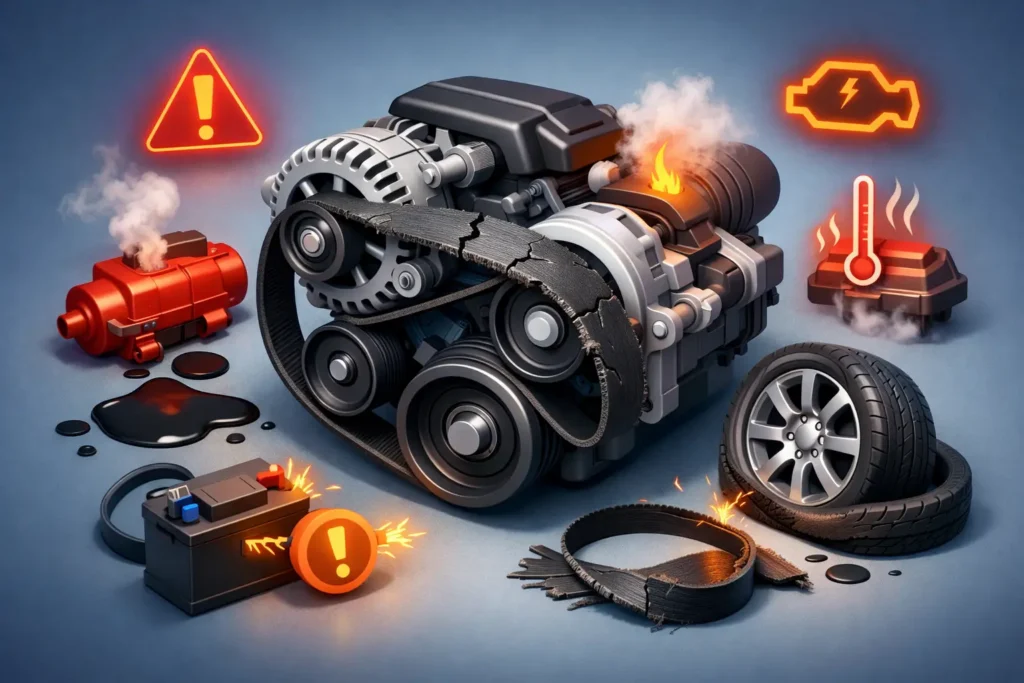
That quick squeal when you start the engine is easy to brush off – until your battery light comes on, the steering gets heavy, or the engine starts running hot. One of the most common signs of bad serpentine belt is that the warning starts small and gets worse fast. If your vehicle depends on one belt to drive key accessories, a failing belt can turn an ordinary commute into a breakdown.
The serpentine belt is a long rubber belt that powers several important systems under the hood. Depending on the vehicle, it may run the alternator, power steering pump, air conditioning compressor, and water pump. When it wears out, slips, or breaks, those systems can stop working the way they should. That is why catching early symptoms matters.
Many drivers have heard the term but are not exactly sure what the belt controls. On most modern vehicles, the serpentine belt is routed around multiple pulleys and keeps several engine accessories operating at the right speed. It is a simple part with a big job.
If the belt loses tension, starts cracking, or comes off track, the effects can show up in different ways. Sometimes the first clue is just a noise. Other times, you notice a warning light, weak A/C performance, or steering that suddenly feels harder than normal. The exact symptom depends on which component is no longer being driven correctly.
A bad serpentine belt does not always fail all at once. In many cases, it gives you a little notice first. The key is knowing which symptoms deserve attention.
This is one of the most common warning signs. If you hear a high-pitched squeal when starting the vehicle, accelerating, or turning on the A/C, the belt may be slipping on the pulleys. That can happen when the belt is worn, glazed, stretched, or contaminated by fluid.
Not every squeal means the belt itself is the only problem. A weak tensioner or misaligned pulley can create the same noise. Still, belt noise is never something to ignore, especially if it starts happening more often.
A quick visual inspection can sometimes tell the story. A healthy belt should look intact and fit snugly on the pulleys. If you can see cracks in the ribs, frayed edges, missing chunks, or a shiny glazed surface, the belt is wearing out.
Modern belts can last a long time, so damage may not always be obvious from a quick glance. Some belts wear in the grooves before the top side shows much age. That is one reason routine inspections matter during regular maintenance.
If the serpentine belt drives the alternator and the belt starts slipping, your charging system may suffer. You might see the battery light on the dash, notice dim headlights, or find that the battery keeps running low.
Drivers sometimes assume a battery warning light automatically means they need a new battery. It depends. In some cases, the battery is fine, but the alternator is not being driven properly because the belt is worn or loose.
On many vehicles, the serpentine belt also helps drive the water pump. If the belt slips or breaks, coolant may stop circulating the way it should, and the engine temperature can rise quickly.
This is where a small belt issue becomes a major repair risk. An overheating engine can lead to much more expensive damage if the vehicle keeps running too long. If the temperature gauge climbs or you see steam, it is time to stop and have the vehicle checked.
If your steering suddenly feels much heavier, especially at low speeds or while parking, the serpentine belt may be part of the problem. On vehicles with belt-driven hydraulic power steering, a failing belt can reduce or cut off steering assist.
That change can be dramatic. One moment the wheel feels normal, and the next it takes much more effort to turn. Because that affects control and safety, it should be inspected right away.
A worn serpentine belt can also affect A/C performance if it is not spinning the compressor as it should. You may notice the air is not as cold as usual, or the cooling seems to come and go.
Of course, weak A/C can also point to refrigerant issues, compressor trouble, or electrical problems. The belt is not always the cause. But if poor A/C shows up along with squealing noises or visible belt wear, it deserves a closer look.
If the belt appears loose, wobbles while the engine is running, or sits unevenly on the pulleys, there may be a tension or alignment issue. In some cases, the belt can even slip off completely.
When that happens, the vehicle may lose multiple systems at once. Charging, cooling, and steering can all be affected depending on the setup. At that point, driving the vehicle can do more harm than good.
Age and mileage are the biggest factors, but they are not the only ones. Heat, stop-and-go driving, contamination from oil or coolant leaks, and worn pulleys can all shorten belt life. Texas heat does not do rubber any favors either.
Sometimes the belt is the worn part. Other times, the belt is reacting to another problem, such as a failing tensioner, seized pulley bearing, or fluid leak. Replacing the belt without addressing the cause can mean the new one wears out too soon.
If you are noticing signs of bad serpentine belt, the safest approach is to treat it as urgent maintenance. That does not always mean the belt will snap today, but it does mean the vehicle has a weak point that can leave you stranded with very little warning.
There is also a difference between a mild symptom and an active failure. A brief chirp on startup may give you some time to schedule service. A battery light, overheating, or sudden loss of steering assist is a much more immediate concern. When those symptoms show up, delaying service is a risk.
Sometimes drivers can make it a short distance, but that does not make it a good idea. If the belt breaks completely, the vehicle may lose charging, cooling, and steering support in one event. What starts as a manageable repair can turn into a tow and a much bigger repair bill.
It also depends on the vehicle. Some engines are more affected than others based on what the belt powers. That is why a proper inspection matters instead of guessing based on symptoms alone.
A proper inspection is about more than looking for cracks. A technician will usually check belt condition, tension, pulley alignment, and the operation of related components like tensioners and idlers. If there is noise, they will want to find out whether the sound is coming from the belt itself or from a pulley or accessory.
That matters because the right repair is not always just a new belt. If a pulley bearing is failing or a fluid leak is contaminating the belt, those issues need to be fixed too. Good diagnosis saves time, money, and repeat problems.
There is no one-mileage answer that fits every car, truck, or SUV. Some belts last far longer than older styles, while others wear faster because of heat, driving habits, or under-hood conditions. Your owner’s manual gives a useful starting point, but real-world inspections are just as important.
If your vehicle is showing symptoms, replacement should be based on condition, not wishful thinking. A belt that looks worn, sounds noisy, or is affecting vehicle performance has already told you something.
If your vehicle is squealing, overheating, showing a battery light, or making steering feel unusually heavy, it is smart to have it checked before the problem grows. At 360 Auto, we believe in straightforward answers, quality workmanship, and repairs done with your daily routine in mind.
A serpentine belt may be a small part compared with the engine itself, but it plays a big role in keeping your vehicle dependable. Catching the warning signs early can help you avoid the kind of breakdown that always seems to happen when you are already late.


