
- July 15, 2026
- By
- In Brakes
- 2
- 0
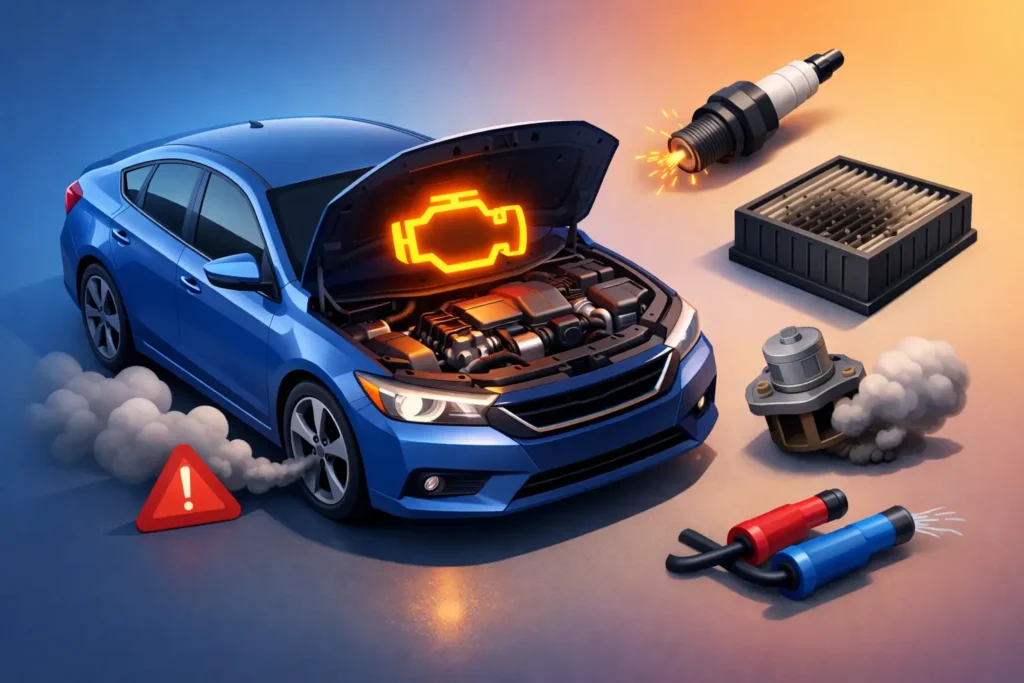
A rough idle is easy to recognize. You may feel a shake through the steering wheel or seat at a stoplight, hear the engine stumble, watch the RPM needle bounce, or notice the car feels close to stalling. If you are asking, “why is my car idling rough,” the answer is usually that your engine is not getting the precise balance of air, fuel, and spark it needs to run smoothly.
A minor vibration can sometimes be normal, especially when the air conditioner first turns on or when a cold engine is warming up. Persistent shaking, surging, stalling, or a check engine light is different. Those symptoms deserve a proper diagnosis before a small performance issue turns into a breakdown or more expensive repair.
Your engine has to work harder at idle than many drivers realize. While driving, higher engine speed can mask small problems. At a stop, the engine is turning slowly and depends on the vehicle’s computer, ignition system, fuel delivery, and air intake system all working together. When one part falls out of range, the idle becomes unstable.
The cause can be simple, such as worn spark plugs or a dirty throttle body. It can also involve a vacuum leak, a failing sensor, fuel injector trouble, or an engine mechanical concern. That is why guessing based on one symptom can lead to unnecessary repairs. A technician should inspect the vehicle, scan for stored diagnostic codes, and test the systems that affect idle quality.
Spark plugs ignite the air-fuel mixture inside each cylinder. As plugs wear, their gap can become too large or deposits can interfere with a clean spark. The result may be a misfire that feels like a shudder at idle, hesitation when accelerating, reduced fuel economy, or a flashing check engine light.
Ignition coils can cause similar symptoms. Many modern vehicles use one coil per cylinder, so one weak coil may make the engine feel uneven even if it still starts and drives. Replacing spark plugs at the manufacturer’s recommended interval helps prevent this common issue.
Your engine computer calculates how much fuel to add based partly on how much air enters the engine. A cracked vacuum hose, damaged intake boot, loose connection, or leaking intake gasket can allow unmetered air into the system. That can create a rough or high idle, especially after the engine has warmed up.
A dirty mass airflow sensor can also send inaccurate information to the computer. These problems are not always visible from the outside, and spraying or replacing parts without testing can make diagnosis more difficult. A thorough inspection is the smarter approach.
The throttle body controls airflow into the engine. Over time, carbon buildup can collect around the throttle plate, restricting airflow when the engine is trying to maintain a low, steady speed. Some older vehicles use a separate idle air control valve that can become dirty or fail.
A rough idle that improves when you press the accelerator slightly may point toward a throttle body or idle-air-related issue. Cleaning may help in some cases, but the correct procedure depends on the vehicle. Many newer electronic throttle bodies require a relearn process after service.
Fuel injectors are designed to deliver a precise amount of fuel. Deposits, electrical faults, or internal wear can keep an injector from delivering the right amount, causing a misfire or uneven idle. A weak fuel pump, restricted fuel filter on vehicles with serviceable filters, or pressure regulator problem may also affect engine performance.
Fuel-related concerns often show up beyond idle. You may notice hard starting, sluggish acceleration, reduced power on hills, or worse gas mileage. The right repair depends on fuel-pressure testing and injector evaluation, not just adding a bottle of fuel treatment.
Modern cars rely on sensors to adjust fuel mixture, ignition timing, and idle speed. A faulty oxygen sensor, coolant temperature sensor, throttle position sensor, crankshaft sensor, or camshaft sensor can send incorrect data and create rough running.
The check engine light is a valuable clue, but a code does not automatically identify the failed part. For example, a code for a cylinder misfire may be caused by a spark plug, coil, injector, vacuum leak, low compression, or another underlying problem. Accurate diagnostics save time and protect your budget.
Sometimes the engine is idling normally, but worn engine or transmission mounts allow more vibration to travel into the cabin. The car may shake most noticeably when stopped in Drive with the brake applied, then feel better in Park or Neutral.
Less commonly, rough idle can be caused by internal engine issues such as low compression, timing problems, or a worn timing chain. These concerns need prompt professional attention, particularly if the engine makes unusual noises, uses oil, overheats, or loses power.
Do not ignore a flashing check engine light. A flashing light often signals an active misfire, which can send unburned fuel into the exhaust system and damage the catalytic converter. Pull over safely when possible and arrange for service rather than continuing a long drive.
You should also schedule an inspection quickly if your car stalls at intersections, smells strongly of fuel, has trouble starting, overheats, produces smoke, or loses power while driving. These symptoms can affect safety as well as reliability.
If the engine only idles rough for a brief period after a cold start and then smooths out, the issue may be less urgent, but it is still worth monitoring. Note when it happens, whether the air conditioner is on, how long it lasts, and whether any warning lights appear. Those details help your technician narrow down the cause.
A few observations can make your visit more productive. Check whether the gas cap is fully tightened, since an EVAP-related warning can sometimes follow a loose cap. Look under the hood only when the engine is cool for visibly loose intake hoses, cracked tubing, or obvious fluid leaks. Avoid touching ignition components or attempting repairs around a running engine.
Pay attention to the conditions that trigger the problem. Does the idle worsen in Drive but improve in Park? Does it happen only with the A/C running? Did it begin after refueling, a recent repair, or a period of missed maintenance? These patterns matter.
It is also helpful to know when routine services were last completed, including spark plug replacement, air filter service, oil changes, and fuel-system maintenance. Still, resist the temptation to replace parts based solely on an online symptom list. Two cars can idle roughly for completely different reasons.
A dependable repair starts with identifying the cause. At 360 Auto, technicians can evaluate warning lights, engine performance, ignition components, air intake concerns, and fuel delivery issues so you know what your vehicle needs and why. Clear communication matters, especially when a rough idle affects the car your family depends on every day.
The best next step is to have the vehicle checked before the shaking becomes a stall, a no-start condition, or catalytic converter damage. A smooth idle is not just more comfortable at a red light – it is a sign your engine is getting the care it needs to keep you moving with confidence.


