
- July 7, 2026
- By
- In Brakes
- 3
- 0
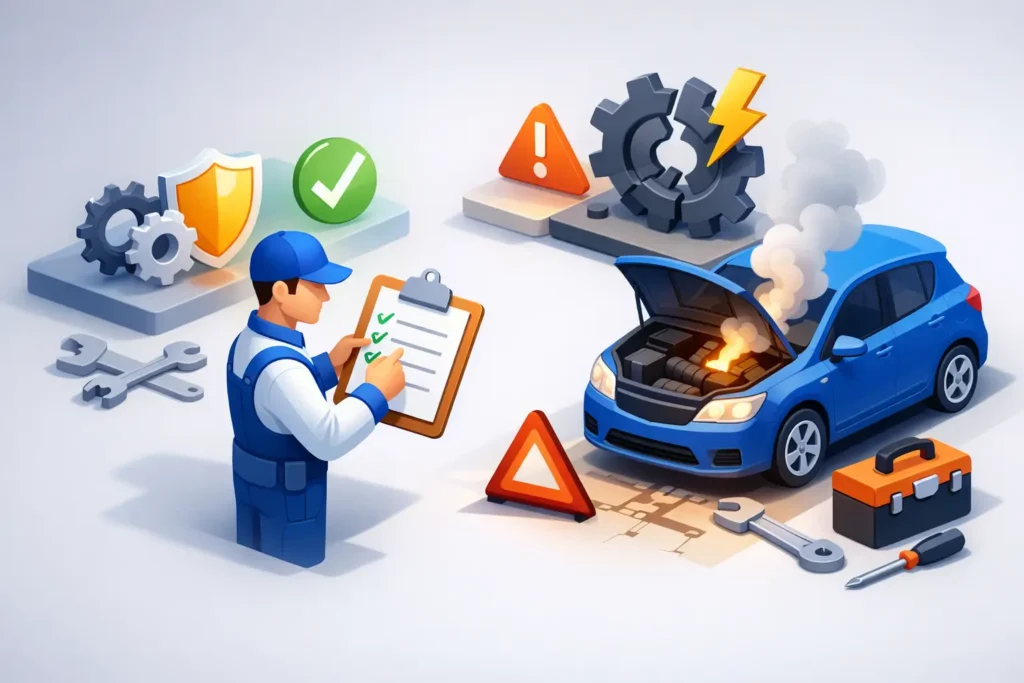
A car rarely picks the right time to quit. It happens on the way to work, in the school pickup line, or halfway through a packed Saturday. If you want to know how to avoid unexpected breakdowns, the answer usually is not one big repair. It is a steady pattern of paying attention, handling maintenance on time, and catching small problems before they turn into expensive ones.
For most drivers, breakdown prevention comes down to consistency. Modern vehicles are built to last, but they still depend on routine care. Oil breaks down, batteries weaken, belts wear, tires lose tread, and warning lights come on for a reason. When basic service gets delayed, your vehicle has fewer chances to protect itself from damage.
The most reliable vehicles are not always the newest ones. They are often the ones that get serviced on schedule. That means keeping up with oil changes, fluid checks, brake inspections, tire rotations, battery testing, and factory-recommended maintenance based on mileage and time.
Oil service is one of the biggest factors. Clean oil helps protect engine parts from friction and heat. Wait too long, and internal wear can build fast. The same goes for coolant, brake fluid, and transmission fluid. These fluids do different jobs, but they all help your vehicle operate safely and efficiently.
Tires also play a bigger role than many drivers realize. Low tire pressure, uneven wear, or damaged sidewalls can leave you stranded just as easily as engine trouble. Regular tire inspections help reduce the risk of blowouts, poor handling, and premature replacement.
Routine maintenance costs less than emergency repairs in almost every case. There is a trade-off, of course. Preventive service takes time, and it can feel unnecessary when the car seems to be running fine. But that short appointment is usually far less disruptive than a tow truck, missed work, or a major parts failure.
Breakdowns often give warnings before they happen. The problem is that many drivers get used to those warnings or hope they will go away on their own. A strange sound today can become a no-start condition next week.
If your engine cranks slowly, your battery may be weakening. If your brakes squeal or grind, the pads may be worn down. If the temperature gauge climbs higher than normal, you may have a cooling system issue. Fluid spots under the car, dashboard warning lights, rough idling, hard shifting, and vibration at highway speeds all deserve attention.
Not every symptom means a major repair is coming. Sometimes the issue is minor, such as a sensor, a small leak, or a tire balance problem. But that is exactly why early diagnostics matter. Small issues are easier to fix when they are still small.
A good rule is simple: if your vehicle feels different, sounds different, or smells different, have it checked. You do not need to diagnose it yourself. You just need to avoid waiting until the problem becomes obvious enough to stop the car completely.
Some warning lights can wait for a scheduled visit. The check engine light still should not be ignored. A steady light may point to anything from an emissions issue to an ignition or fuel system problem. A flashing light is more urgent and can signal a condition that may damage the engine or catalytic converter.
Drivers sometimes keep going because the car still seems to run normally. That can be risky. Even if the vehicle feels fine, the system has already detected a fault. The sooner it is scanned and diagnosed, the better your chances of avoiding a larger repair.
Knowing how to avoid unexpected breakdowns is not only about what happens in the shop. It is also about what you do in your driveway, at the gas station, and during your normal week. A few simple habits can make a real difference.
Start by watching your tire pressure. Underinflated tires create extra heat and wear, and they can hurt fuel economy too. Check pressure regularly, especially during temperature swings.
Next, pay attention to fluid levels. You do not need to be a mechanic to spot a low coolant reservoir or notice that your windshield washer fluid is empty. If a fluid level keeps dropping, that is a clue worth addressing instead of topping it off repeatedly.
Keep your gas tank from running too low on a regular basis. Running near empty too often can strain the fuel system and leaves you with no margin if traffic gets worse or a detour pops up. It is a small habit, but it matters.
It also helps to keep your battery terminals clean, replace wiper blades when visibility drops, and make sure your lights are working. These are not dramatic repairs, but they support safer daily driving and can help you catch electrical issues early.
Texas weather can be hard on vehicles. Heat puts stress on batteries, cooling systems, hoses, and tires. A battery that seems fine in mild weather may fail quickly during high summer temperatures. Tire pressure can shift with temperature changes, and worn belts or hoses are more likely to crack over time.
That is why seasonal inspections are valuable. Before summer road trips or heavy commuting periods, it makes sense to check the battery, AC system, coolant condition, tire tread, and brake performance. Prevention works best when it matches how and when you drive.
There is a difference between urgent and immediate, and that is where many drivers get stuck. If a belt is worn but not broken, or if a hose has started to deteriorate but has not burst, it may be tempting to put the repair off. The vehicle still runs, so it feels manageable.
The risk is that some components fail all at once. A weak battery may give a few slow starts before it leaves you stranded. A worn serpentine belt may squeak for a while, then snap and affect multiple systems at once. Brake problems often start gradually, then reach the point where stopping distance or rotor damage becomes a real concern.
This is where clear advice from a trusted shop matters. Not every recommendation needs same-day action, and honest service means explaining what should be done now, what can be planned for later, and what signs to watch in the meantime. That kind of transparency helps drivers make smart decisions without guessing.
One of the easiest ways to prevent surprise issues is to track what has already been done. When was the last oil change? How old is the battery? Have the brakes been inspected recently? Was the belt replaced at the recommended interval?
Without records, it is easy to lose track and assume something still has time left. Maintenance schedules are based on real wear patterns, and they exist for a reason. Some parts age by mileage, others by time, and many by a combination of both.
If you drive short trips, sit in traffic often, haul extra weight, or spend long hours commuting, your vehicle may need attention sooner than someone with lighter driving habits. That is why service should be based on actual use, not just best-case assumptions.
A breakdown is harder to handle when you are also scrambling to figure out where to go. It helps to have a local repair shop you already trust for inspections, maintenance, and diagnostics. That relationship makes it easier to ask questions, plan ahead, and avoid the cycle of waiting until something fails.
For many Spring drivers, convenience matters just as much as expertise. You need clear answers, fair pricing, and confidence that the work is being done right. At 360 Auto, that means helping customers stay ahead of repairs instead of only reacting after a problem has already interrupted the day.
The best strategy is not perfection. Few people catch every issue early, and every vehicle will need repairs eventually. What works is staying consistent, responding to warning signs, and treating maintenance as part of protecting your time as much as your car. A dependable vehicle is usually the result of small decisions made early, before the roadside becomes part of the plan.


