
- July 5, 2026
- By
- In Brakes
- 3
- 0
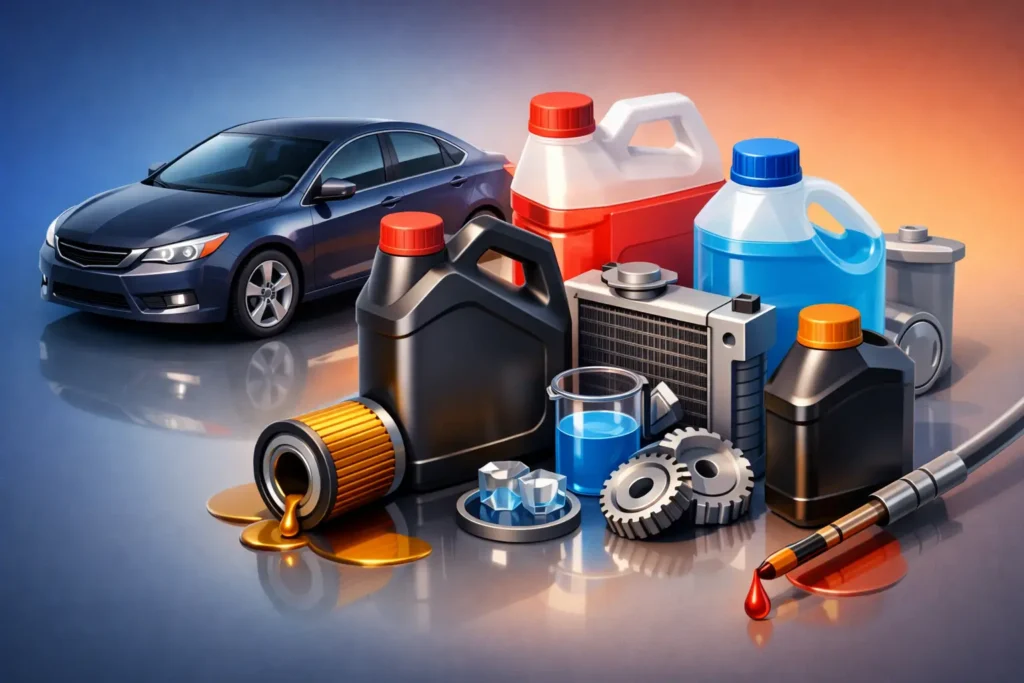
Once a vehicle passes 75,000 or 100,000 miles, fluid choices start to matter more than most drivers realize. The best fluids for high mileage cars are not always the same products a newer vehicle uses without a second thought. Seals age, internal parts wear, heat builds up faster, and neglected maintenance starts to show.
That does not mean an older car is fragile. In many cases, it means the opposite. A well-maintained high mileage vehicle can stay dependable for years, but it needs the right protection in the right systems. Oil, coolant, transmission fluid, brake fluid, and power steering fluid all play a role in how long your car lasts and how confidently it drives every day.
As engines and drivetrains age, clearances can change, rubber seals can harden, and sludge or deposits may build up inside systems that have gone too long between services. A fluid that worked fine at 30,000 miles may not provide the same protection at 130,000 miles.
That is why high mileage formulas exist. They are designed to help reduce wear, condition aging seals, and support components that have seen years of heat and use. They are not miracle products, and they cannot reverse mechanical damage. But when used appropriately, they can help slow common age-related issues and support more consistent performance.
The key is matching the fluid to the vehicle’s condition, not just its odometer reading. A clean, regularly serviced car with 140,000 miles may need something different than a neglected one with 90,000 miles.
For most older vehicles, high mileage motor oil is the first place to look. These oils are blended with additives meant to help reduce leaks around aging seals, limit sludge, and protect internal engine parts that have already seen significant wear.
If your vehicle manufacturer allows it, a high mileage synthetic or synthetic blend oil is often a smart choice. Synthetic oils handle heat better and usually provide stronger protection during stop-and-go driving, hot Texas weather, and longer service intervals. That matters for commuters and families who depend on their cars every day.
The important part is using the correct viscosity grade listed for your vehicle. Going thicker just because the car is older is not always the right move. In some engines, that can reduce proper flow at startup. If an engine is burning oil or showing low oil pressure, the best answer is a proper inspection, not guesswork.
Transmission fluid is where many high mileage owners get nervous, and for good reason. If a transmission has never been serviced and is already slipping or shifting hard, changing fluid may not solve the problem. In some cases, a neglected transmission can reveal existing wear after service.
Still, that should not scare drivers away from maintenance. If the transmission is operating normally and service is done at a reasonable interval, using the manufacturer-specified fluid is one of the best things you can do for longevity. Automatic transmissions are very sensitive to fluid type. Using the wrong one can create shift issues, overheating, or internal damage.
For high mileage vehicles, fresh transmission fluid can help improve shift quality, reduce heat, and protect seals and clutch materials. The method matters too. Some vehicles do better with a drain and fill than a full flush, especially if maintenance history is unclear. This is one area where professional guidance makes a real difference.
Older engines do not tolerate cooling system neglect well. Coolant does more than prevent overheating. It also protects against corrosion, lubricates the water pump, and helps regulate temperatures throughout the engine.
The best coolant for a high mileage car is the exact type required by the manufacturer. Color alone is not enough to identify it. Mixing the wrong formulas can reduce protection or create buildup inside the system.
If your vehicle is older and the radiator, hoses, thermostat, or water pump have not been serviced in years, coolant condition deserves attention. Dirty, weak, or contaminated coolant can accelerate wear and increase the chance of overheating, which is one of the fastest ways to turn an aging vehicle into an expensive repair.
Brake fluid often gets ignored because drivers do not see it leaking or hear it making noise. But it absorbs moisture over time, and that moisture can lower braking performance and corrode internal brake components.
In a high mileage car, old brake fluid can affect the master cylinder, calipers, wheel cylinders, and ABS components. A brake fluid exchange helps keep the hydraulic system healthier and can support a firmer, more consistent brake pedal.
This is not a place to cut corners. Your brake system depends on clean fluid and proper pressure. If the pedal feels soft, braking distances are increasing, or the fluid looks dark, it is worth having the system checked.
Not every vehicle uses traditional power steering fluid anymore, but many high mileage cars on the road still do. When power steering fluid ages, it can lose lubricating ability and allow extra wear inside the pump and steering gear.
If you hear whining when turning, feel stiffness in the steering wheel, or notice fluid seepage, the system may need service. The right fluid can help protect seals and moving parts, but once again, fluid type matters. Some systems require a specific power steering fluid, while others use automatic transmission fluid. Using the wrong one can create more problems than it solves.
These fluids do not come up as often in everyday conversation, but they matter on rear-wheel drive, all-wheel drive, four-wheel drive, and many truck or SUV applications. Gear oil breaks down over time, and when it does, gears and bearings lose critical protection.
If your vehicle tows, carries heavy loads, or sees a lot of highway miles, this service becomes even more important. High mileage drivetrains benefit from clean gear oil that matches the correct weight and additive requirements.
The best fluids for high mileage cars tend to help most when the vehicle is still in generally good working order but showing normal signs of age. Maybe the engine has a small seep, startup is a little noisier than it used to be, or shifts are not quite as smooth as they were years ago. In those cases, the right fluid can support the system and help slow further wear.
If a car already has major mechanical damage, fluid alone will not fix it. A severely slipping transmission, an overheating engine, or a brake system with failing parts needs repair, not just a better bottle of fluid. Good maintenance supports healthy parts. It does not replace them.
One of the biggest mistakes is assuming any product labeled high mileage is automatically the best choice. What matters most is whether it meets your vehicle’s specifications and fits the condition of the system.
Another mistake is waiting too long because the car “still runs fine.” High mileage vehicles often give subtle warnings before they give obvious ones. By the time a fluid problem becomes easy to notice, wear may already be advanced.
It is also common for drivers to top off fluids without finding out why a level dropped in the first place. Low coolant, low brake fluid, or repeated oil loss usually points to an underlying issue. Topping off helps in the short term, but inspection is what protects the vehicle long term.
If you are not sure which fluids your car needs, start with three questions. How many miles are on the vehicle, what does the maintenance history look like, and are there any current symptoms like leaks, rough shifting, overheating, or steering noise?
That information helps determine whether the best next step is a routine fluid exchange, a high mileage oil change, or a deeper inspection. For many drivers, especially those balancing work, school runs, and daily errands, the goal is simple: keep the car reliable and avoid preventable breakdowns.
A trusted local shop can check fluid condition, confirm manufacturer requirements, and recommend service based on the vehicle’s actual needs rather than a one-size-fits-all schedule. At 360 Auto, that means clear answers, quality workmanship, and helping drivers in Spring keep their vehicles on the road with confidence.
Older cars can still be strong, dependable vehicles. Give them the right fluids at the right time, and they usually return the favor with more miles, fewer surprises, and a lot less stress.


