
- April 28, 2026
- By
- In Brakes
- 13
- 0
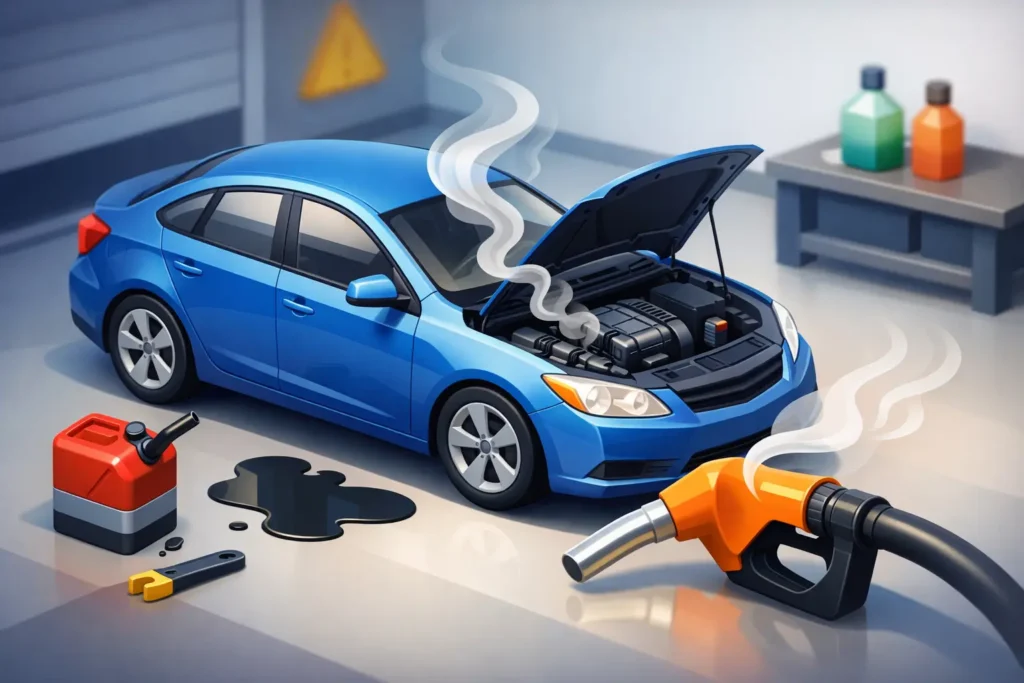
A gas smell is one of those warning signs drivers should not ignore. If you have been asking, why does my car smell like gas, the short answer is that fuel vapors are escaping somewhere they should not. Sometimes the cause is minor, like a loose gas cap. Other times, it points to a leak or engine problem that needs attention right away.
Gasoline is highly flammable, and even a small fuel issue can become a safety concern. It can also hurt fuel economy, trigger a check engine light, and make everyday driving uncomfortable. The good news is that the source can usually be found with a proper inspection.
The location of the smell can tell you a lot. If you notice it outside the vehicle, especially near the rear, the issue may be around the gas tank, filler neck, fuel lines, or gas cap. If the smell is stronger under the hood or inside the cabin, the problem may be tied to the engine, fuel injectors, evaporative emissions system, or ventilation pulling fumes into the car.
It also matters when the smell happens. Some drivers notice it only right after filling up. Others smell gas when they start the car, idle in traffic, or run the air conditioning. Those details help narrow down the cause and can make diagnosis much faster.
A loose, cracked, or missing gas cap is one of the simplest explanations. The cap helps seal the fuel system and keep vapors from escaping. If it is not tightened properly, or if the seal is worn out, fumes can leak out and create a noticeable smell. On many vehicles, this can also trigger a check engine light.
Overfilling the gas tank is another common cause. If fuel is topped off after the pump clicks off, extra gas can enter parts of the evaporative emissions system that are meant to handle vapor, not liquid fuel. That can create a temporary gas smell, especially after a fill-up. If the smell goes away after a short drive, overfilling may be the reason. If it keeps happening, the system may need to be checked.
Fuel leaks are more serious. A damaged fuel line, failing injector seal, cracked hose, or leaking tank component can allow raw fuel to escape. In some cases, you may even see drips or stains under the vehicle. In others, the leak is small enough that you only notice the odor. Either way, a fuel leak should be treated as urgent.
A faulty evaporative emissions system can also be the culprit. This system, often called the EVAP system, captures gas vapors and routes them back into the engine instead of letting them escape into the air. If a purge valve, charcoal canister, vent valve, or related hose fails, vapors can build up and cause that fuel smell. This type of issue is common and not always obvious without diagnostic testing.
Leaking fuel injectors or injector O-rings can produce a stronger smell near the engine bay. When these seals wear out, gasoline can seep around the injectors instead of staying where it belongs. You may notice rough idling, hard starts, or a drop in fuel efficiency along with the odor.
In some cases, the engine is running too rich, which means it is burning more fuel than necessary. That can happen because of a bad sensor, ignition issue, or fuel system imbalance. A rich-running engine may produce a gas smell from the exhaust, and you may also notice poor mileage, sluggish performance, or black smoke in more severe cases.
Not every gas smell means an emergency, but some situations call for immediate action. If the odor is strong, persistent, or getting worse, do not assume it will clear up on its own. If you see liquid fuel, notice smoke, or experience misfiring along with the smell, it is safest to stop driving the vehicle.
A gas odor inside the cabin deserves extra caution. Fuel vapors should never be entering the passenger area. If they are, there may be a leak under the hood, near the tank, or in the venting system. Breathing in fumes for too long can cause headaches, dizziness, and nausea, especially in heavy traffic or hot weather.
Heat makes these problems more serious. In a place like Spring, Texas, high temperatures can intensify fuel vapor odors and increase pressure in the fuel system. That does not create the problem by itself, but it can make an existing issue easier to notice and more urgent to repair.
There are a few simple things you can look at without getting too far into the vehicle. First, check the gas cap. Make sure it is present, tightened fully, and not cracked or damaged. If it looks worn, replacing it may solve the issue.
Think about whether you recently topped off the tank. If the smell started right after a fill-up and fades within a day, overfilling may be the reason. If not, there is likely another cause.
You can also look under the vehicle for signs of leaking fuel. Fresh gasoline may appear as a clear or slightly yellowish puddle and will usually smell strong right away. Do not crawl under the car or inspect near hot engine components if you suspect a leak. A visual check from a safe distance is enough.
If your check engine light is on, that is another clue. EVAP system faults, purge valve problems, and loose gas caps often trigger trouble codes. A professional scan can point the technician in the right direction, but the code itself is only part of the picture. Proper diagnosis still matters.
Fuel system problems are not something most drivers want to guess at, and for good reason. Several different issues can create the same smell, and replacing the wrong part wastes time and money. A trained technician can inspect the system, check for leaks, test EVAP components, and confirm whether the problem is coming from the tank, lines, injectors, or engine controls.
There is also a safety factor. Working around fuel requires care, ventilation, and the right procedures. Even a small leak can become dangerous if it contacts a hot surface or electrical spark. That is why it makes sense to have the problem checked promptly instead of waiting for it to get worse.
At a full-service neighborhood shop like 360 Auto, the goal is not just to fix the smell. It is to identify the cause clearly, explain what is happening in plain language, and get you back on the road with confidence.
If the smell is strongest after you park, heat soak may be revealing a problem that is less noticeable while driving. Once the engine is shut off, residual heat can cause fuel vapors to expand, making leaks or EVAP issues easier to smell. This often happens with injector seal leaks, hose cracks, or vapor system faults.
That pattern is worth paying attention to. A vehicle that smells fine on the road but smells like gas in the driveway is still telling you something is wrong.
Gasoline smells rarely fix themselves. Sometimes the solution is simple, but sometimes it is the early sign of a leak, failing component, or performance issue that will only get more expensive over time. If your car smells like gas more than once, trust that warning sign and have it inspected. A quick, accurate diagnosis now can protect your safety, your fuel economy, and your peace of mind the next time you turn the key.


