
- April 16, 2026
- By
- In Brakes
- 14
- 0
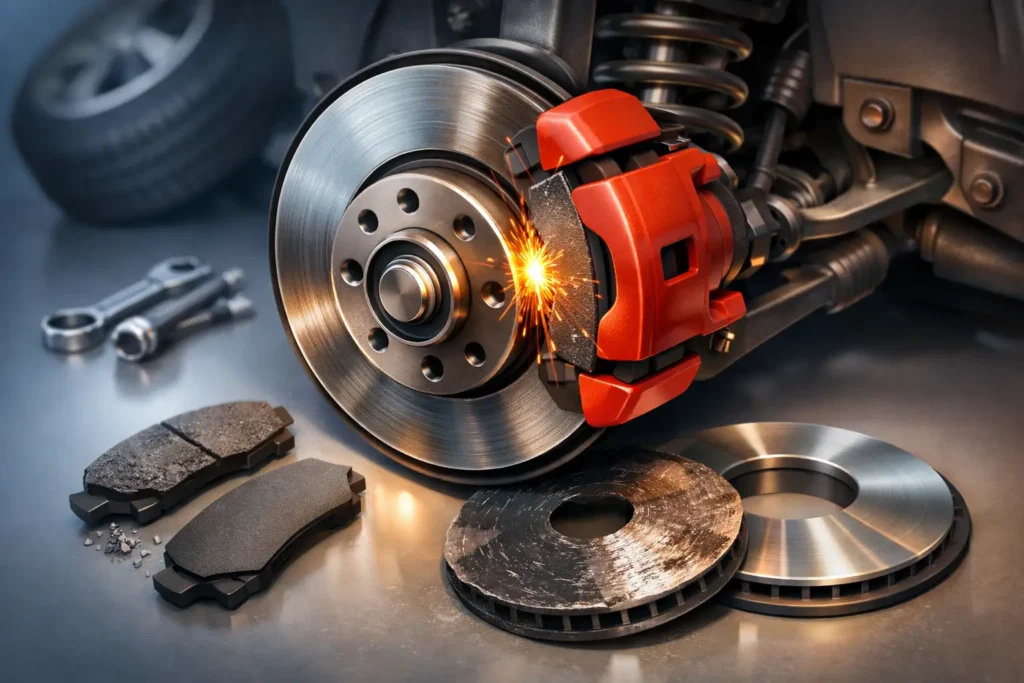
That harsh metal-on-metal sound when you hit the brakes is not something to put off until next week. If you are asking what causes brake grinding, the short answer is wear, damage, or debris – and all three can turn a small brake issue into a bigger repair if you keep driving.
Your brakes are one of the few systems on your vehicle that give you a loud warning when something is wrong. Grinding is that warning. Sometimes it happens because brake pads are worn all the way down. Sometimes it points to a stuck caliper, damaged rotor, or even a rock caught between components. The cause matters, because the fix and the cost can change depending on what is happening at the wheel.
Brake grinding usually happens when metal parts that should not be contacting each other start rubbing together. In a healthy brake system, the brake pads press against the rotor with a friction material designed to slow the vehicle safely. When that friction material wears away, the metal backing plate can contact the rotor directly. That is one of the most common reasons drivers hear a grinding noise.
But worn-out pads are not the only possibility. Rust buildup, road debris, damaged hardware, poor installation, or uneven brake wear can all create similar sounds. In some cases, the grinding happens only when you brake. In others, it may continue while driving, which can point to a part that is dragging or not releasing the way it should.
That difference matters. A brief noise during the first stop of the morning may have a different cause than a constant grinding sound in traffic.
For most vehicles, the first thing a technician will check is the brake pads. Pads wear down over time as part of normal driving. If they are left in service too long, the friction material becomes too thin and eventually disappears. Once that happens, the metal backing of the pad starts grinding against the rotor.
At that point, the problem is no longer just about replacing pads. The rotor may also be scored or damaged, and that can increase the repair needed. The longer the vehicle is driven in that condition, the more likely it is that the heat and friction will affect other brake components too.
This is one reason routine inspections matter. Catching brake pads early usually means a simpler repair. Waiting until they grind often means more parts and more labor.
Rotors need a smooth, even surface for the pads to grip correctly. If a rotor becomes heavily grooved, warped, cracked, or badly rusted, braking can become noisy and rough. Grinding may show up when the pads move over that damaged surface.
Rotor problems do not always start on their own. They often happen because worn pads were ignored, the brake system overheated, or moisture caused corrosion over time. Surface rust after rain or overnight parking is usually minor and may clear quickly after a few stops. Heavy rust that has been building for a while is different and should be inspected.
If your steering wheel shakes when braking or the pedal feels uneven along with the grinding noise, rotor issues move higher on the list of likely causes.
Sometimes the answer to what causes brake grinding is surprisingly simple. A small rock, road grit, or other debris can get trapped between the rotor and the backing plate or another brake component. That can create a scraping or grinding sound that seems serious, even if the main brake parts are still in decent shape.
The challenge is that debris sounds can mimic more serious brake failure. From the driver’s seat, it is difficult to tell the difference. If the noise starts suddenly after driving on gravel, construction roads, or rough pavement, debris is possible. Still, it is smart to have the brakes checked rather than assume it will work itself out.
Brake calipers are responsible for pressing the pads against the rotor and then releasing properly when you let off the pedal. If a caliper sticks, one pad may stay in contact with the rotor longer than it should. That can wear the pad down quickly and create heat, odor, pulling, and grinding.
This kind of issue can be easy to miss at first. The vehicle may still stop, but one side may be doing more work than the other. Over time, that uneven wear can damage the rotor and reduce braking performance.
A grinding noise paired with the smell of hot brakes, a wheel that feels unusually hot, or the vehicle pulling to one side deserves quick attention.
Many drivers assume brake grinding always comes from the front brakes because front brakes handle most of the stopping force. While that is often true, rear brakes can also grind. Rear disc brakes can wear down the same way front pads do. Rear drum brake systems can also produce grinding noises if shoes, springs, or hardware wear out or break.
Because rear brake issues are sometimes less obvious from the driver’s perspective, they can go unnoticed until the sound becomes severe. That is another reason a full brake inspection matters instead of focusing only on one axle.
New brakes should not make a harsh grinding noise, but there are a few situations where noise can happen after service. Improper installation, low-quality parts, missing hardware, or rotors that were not properly matched to the new pads can all lead to trouble. In other cases, a light break-in noise may occur briefly as new parts seat together, but true grinding is not normal.
If your brakes started grinding right after a repair, do not wait to have them looked at. Fresh brake work should give you confidence, not uncertainty.
If you hear grinding while driving and your foot is not on the brake, that can point to a different issue. A backing plate may be bent and touching the rotor. A wheel bearing could be failing. A brake pad may be worn so badly that it drags all the time. A seized caliper can also keep parts in contact even when braking is not being applied.
This is where diagnosis matters more than guessing. Several problems can sound similar, but the repair approach is very different depending on the source.
The safest answer is no. Grinding brakes mean something is already wrong, and braking performance may be reduced even if the vehicle still seems to stop. The risk is not just extra damage to rotors or pads. You are also dealing with a critical safety system that may not respond the same way in a sudden stop.
There is also a cost issue. A repair that might have started as a pad replacement can become a larger brake job if rotors, calipers, or other hardware are damaged by continued driving. Putting it off rarely saves money.
If the grinding is loud, constant, or paired with vibration, a soft pedal, warning lights, or longer stopping distance, the vehicle should be inspected as soon as possible.
A proper brake inspection should go beyond a quick glance at the pads. The technician should evaluate pad thickness, rotor condition, caliper operation, brake hardware, fluid condition, and any signs of uneven wear or heat damage. If the sound is intermittent, it also helps to describe when it happens – first thing in the morning, only during turns, only at low speeds, or every time you brake.
That information helps narrow down the cause faster and avoids replacing parts based on assumptions. At a local shop like 360 Auto, clear communication matters just as much as the repair itself. Most drivers are not looking for a complicated explanation. They want to know what is wrong, what it takes to fix it, and whether the vehicle is safe to drive.
The best way to avoid brake grinding is to stay ahead of brake wear before the noise starts. Regular inspections during routine maintenance can catch thinning pads, worn rotors, and sticking components early. Paying attention to smaller warning signs helps too, including squealing, vibration, pulling, or changes in pedal feel.
Driving habits also play a role. Heavy braking, stop-and-go traffic, towing, and carrying extra weight can wear brakes faster. That does not mean you are doing anything wrong. It just means your brake system may need service sooner than someone with lighter highway driving.
If your vehicle is making a grinding sound, trust what you are hearing. Brakes rarely get louder and then fix themselves. A timely inspection protects your safety, helps control repair costs, and gets you back on the road with confidence.


